

Solar Panel Kit Buying Guide for Home Solar Systems
Time : Jul 06, 2026 View : 806
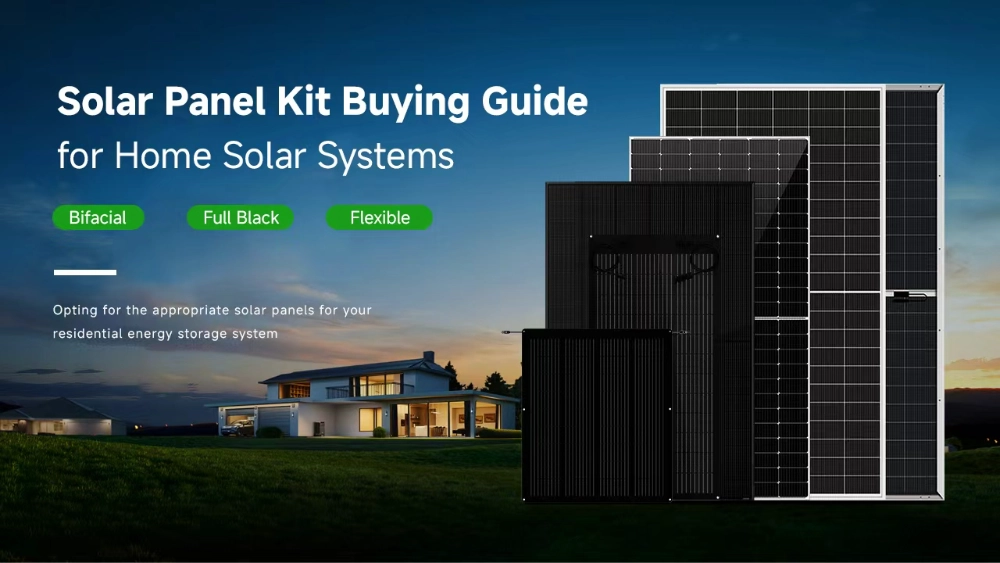
A solar panel kit can look simple at first. Buyers see panels, an inverter, maybe a battery, and cables. In real home solar systems, the kit has to work as one electrical and structural setup. If the panels are suitable but the inverter is wrong, the project may not run well. If battery storage is added without checking load behavior, the user may pay for capacity that does not fit daily use.
This guide explains how buyers, installers, and distributors should review a home solar kit before ordering. The main point is not to choose the largest panel wattage or the cheapest inverter. A better plan is to match solar panels, inverter type, storage, mounting structure, cables, connectors, monitoring, and local rules around the actual site.
Why a Solar Kit Is More Than Panels
A complete kit should answer one practical question: can the system generate power, convert it safely, support the intended load, and remain serviceable after installation?
Solar panels start the power flow
Solar panels generate DC electricity from sunlight. Buyers should review certain details when they select solar panels for home projects. These details include panel wattage, roof area, shading, roof direction, and daily energy goal. A high-output module may not help much. This happens if the roof is shaded for half of the day. It can also occur if the available area is too small for the planned array.
Panel appearance can also matter on visible residential roofs. Some buyers prefer full black modules for a cleaner look. Others focus mainly on price and output. Either way, panel selection should follow the site survey.
Conversion and protection decide practical use
Most home appliances use AC power. The system therefore needs a solar inverter. This inverter converts DC electricity into usable AC power. It also helps to manage system operation. The right choice depends on the project. Buyers may select an on-grid inverter, an off-grid inverter, or a hybrid inverter.
Protection devices, cable routing, connectors, and monitoring also affect safety and maintenance. These parts may look small in a quotation. Even so, they can create service issues later.
What Components Should a Home Solar Kit Include?
A good kit is built around component matching. The following parts should be reviewed together instead of being purchased one by one.
Solar panels
Panels are the generation side of the solar power system. Buyers should compare output, module size, efficiency, roof fit, and shade condition. The panel plan should also match the inverter input range. If the string design does not fit the inverter, the system may lose energy or require redesign during installation.
Solar inverter
The inverter is the control point between panels, loads, storage, and the grid. An on-grid inverter is usually used when the grid is stable and battery backup is not required. An off-grid inverter suits sites without reliable grid access. A hybrid inverter is more suitable when the home needs solar use, battery charging, and backup output in one system.
For a home solar system, inverter selection should follow the system’s purpose. A buyer who may add storage later should not treat inverter choice as a small detail.
Mounting, cables, and connectors
Mounting keeps the array stable. Roof type, tilt, wind exposure, waterproofing, and service access should be checked before choosing the mounting system.
PV cables, MC4 connectors, DC/AC cables, and combiner boxes should match the system current, voltage, and site layout. For installers and distributors, these parts also affect inspection and after-sales work.
Battery storage when needed
Battery storage is not required in every kit. It becomes useful when the buyer wants evening solar use, backup power, or better self-consumption. A kit with solar panels, a battery, and an inverter should be checked as a whole. The battery should match the inverter, the load, and the PV array, not only the buyer’s preferred capacity.
Which Solar Kit Type Fits the Home Project?
The system type should be chosen before detailed component selection. This step prevents buyers from ordering a kit that fits the budget but not the site.
| Solar Kit Type | Best Fit | Battery Needed? | Main Buyer Check |
| On-grid kit | Homes with stable grid access | Usually no | Grid rules, inverter type, self-consumption target |
| Off-grid kit | Remote homes, farms, weak-grid areas | Yes | Daily load, battery bank, off-grid inverter |
| Hybrid kit | Homes needing solar use and backup | Usually yes | Hybrid inverter, battery matching, critical loads |
An on-grid kit is often simpler, but it may not support backup during outages. An off-grid kit needs more careful battery and load planning. A hybrid solar system sits between the two and is often the better fit when users want both solar use and backup power.
When Should a Kit Include Battery Storage?
Battery storage should be added for a clear reason. Adding it only because “more complete” sounds better can increase cost without improving real value.
Evening use is one reason. If the home uses more electricity after sunset, storage can help shift daytime solar generation into later use. Backup is another reason. If power cuts are common, the kit should define which loads need support first.
A hybrid setup can coordinate PV input, battery charging, grid use, and backup output. For buyers comparing residential storage categories, the residential ESS page can help narrow the first product direction before detailed design.
How Buyers Should Match Panels, Inverter, Battery, and Mounting
Panel capacity should match daily energy goals and available space. A larger array may be useful, but only if the roof, inverter, and grid rules can support it. The inverter type should match the project’s purpose. A basic on-grid inverter may not suit a future backup plan, while a hybrid inverter may be excessive for a simple daytime self-consumption project.
Battery storage should match real use time. A home that only needs short backup does not need the same storage plan as a home that wants long evening use. Mounting should also match roof structure, wind exposure, waterproofing, and cable distance.
Where Sunway Micro Complete 800W Balcony Solar System Fits
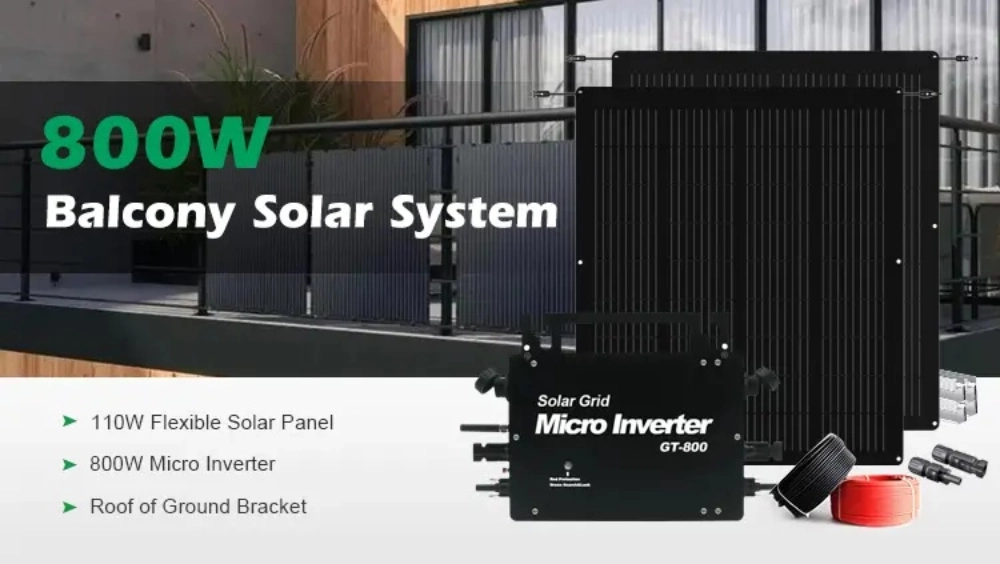
Not every home solar kit project starts with a private roof. Some apartment users, urban homes, and small-space buyers need a compact kit that can use balcony railing space instead of a full rooftop array. The Sunway Micro Complete 800W Balcony Solar System for apartment and balcony use is a useful reference for this part of the kit, especially when buyers want panel generation, microinverter conversion, and simple installation in a limited outdoor area.
This kit includes 8 pieces of 110W flexible solar panels, 1 piece of 800W micro inverter with a 2m AC cable and user manual, 4mm2 red and black PV cables, optional stainless-steel fasteners, and carton packing. Its design focuses on railing panels, microinverter conversion, app tracking, and grid interaction, so users can check solar yield while the public grid supplies extra power when household demand rises above solar output.
The product still needs proper site matching. Balcony direction, shading, railing strength, wind exposure, local plug-in rules, and utility meter policy should be checked before purchase. It should be treated as a small-space solar panel kit for partial daily grid-consumption offset, not as a full-home backup solution. If the project needs storage or longer backup, the battery plan should be reviewed separately against the load profile and local grid condition.
What Buyers Should Prepare Before Asking for a Quote
Before asking for a home solar kit quotation, buyers should prepare practical site data. Useful details include roof size, roof type, installation direction, shading condition, daily electricity use, daytime and evening load pattern, grid condition, backup target, critical load list, preferred system type, estimated panel capacity, battery need, cable distance, local voltage, monitoring need, and future expansion plan.
This information also helps compare quotations fairly. A lower price may exclude storage, mounting parts, protection devices, or monitoring. The scope should be checked line by line.
Common Mistakes When Buying a Solar Kit
One mistake is buying panels before checking the full kit. Panels matter, but inverter, mounting, cable, connector, and protection choices decide how the system works after installation.
Another mistake is choosing the inverter too early. The inverter should follow the system type, not the other way around. A buyer planning future storage should check hybrid compatibility at the beginning.
A third mistake is ignoring the roof. Roof strength, tilt, waterproofing, shade, and wind exposure can affect installation cost and long-term performance. The last mistake is adding storage without load planning. Storage should support a clear goal, such as evening use, backup power, or weak-grid operation.
How Sunway Solar Kit Solutions Support Home Projects
Sunway provides solar panels, solar inverters, energy storage batteries, on-grid systems, off-grid systems, hybrid systems, mounting systems, and solar energy storage solutions. For home projects, the key value is not a single product name. It is the ability to match panels, inverter, battery, mounting, and monitoring around the user’s actual site.
A complete solar panel kit should be built around the home’s roof, load, grid condition, and backup target. That is also why buyers should share site information before choosing final components.
Build a Home Solar Kit Around Real Site Conditions
A home solar kit works best when panel capacity, inverter type, battery storage, mounting structure, and backup goals are reviewed together. Share your roof size, daily electricity use, grid condition, backup target, installation space, and preferred system type with us. Our team can help review whether an on-grid, off-grid, or hybrid kit is more suitable for your project. Send your home solar project details for a practical configuration review.
FAQ
Q: What does a solar panel kit usually include?
A: A solar panel kit typically consists of several basic components. These include solar panels. The kit also includes an inverter and a mounting structure. It provides PV cables. It provides connectors and protection devices. Some kits also include battery storage. The final configuration varies. It varies according to the system. The system may be on-grid. It may be off-grid. Or it may be hybrid.
Q: Do all home solar systems need battery storage?
A: No. On-grid home solar systems can operate without batteries. They can do this if the grid is stable. They can do this if backup power is not required. Off-grid and hybrid systems usually need battery storage. They need it for night use. They need it for backup power as well.
Q: How do buyers choose between an on-grid, off-grid, and hybrid solar kit?
A: Buyers should compare several key factors. These factors include grid stability. They include daily electricity use. They include backup demand. Buyers should also consider installation space. They should review solar self-consumption goals. They should check local grid rules. They should complete this process before they select the system type.