

Balcony Solar System Guide for Apartments: Panels, Microinverters, Storage, and Installation
Time : Jun 22, 2026 View : 852
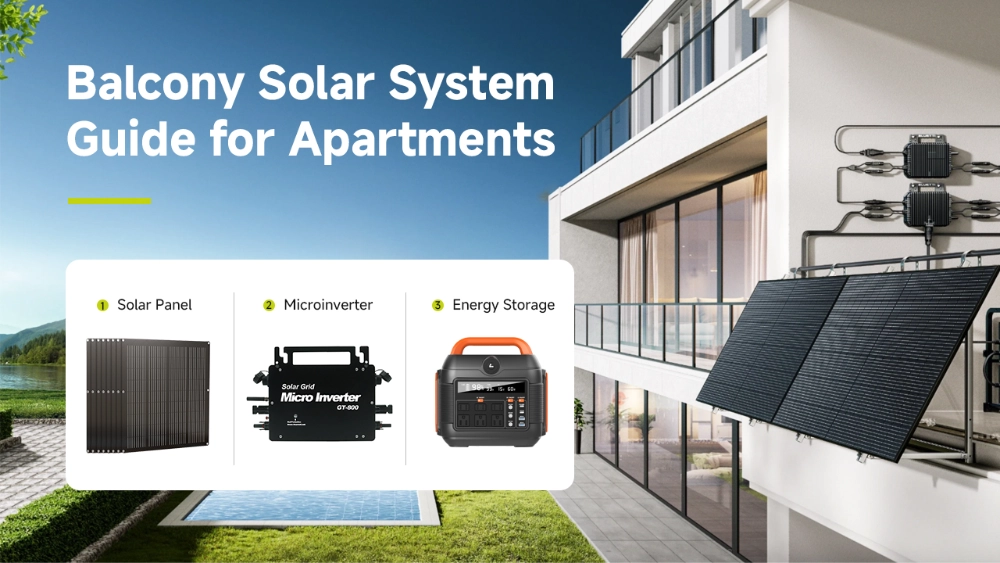
Apartment solar projects require a distinct design approach from rooftop solar.Most apartment users have limited outdoor space, shared building rules, and no private roof. A balcony solar system helps them use that limited outdoor space. It offsets part of daily grid consumption. This occurs especially during daylight hours.
For buyers, installers, and distributors, the question goes beyond whether the system is small enough for an apartment. The solar panel system must fit the balcony structure. In addition, it must comply with local rules. It must match the user load pattern. Later storage needs must be considered too. This guide explains how panels, microinverters, storage, and installation details should be checked before purchase.
What a Balcony Solar System Does in an Apartment
A balcony system is a compact solar power system. It is designed for users who cannot install a standard rooftop array. The system typically brings together lightweight panels. It also includes a microinverter. Other components include mounting fasteners, PV cables, and monitoring. The system is normally used to reduce part of the daily grid use. It is not meant to power every appliance in the apartment.
How a Small Apartment Solar System Works
Solar panels gather sunlight. They generate DC power. A microinverter converts this DC power into AC power that meets apartment requirements. It can operate in parallel with the public grid. The grid then supplies additional electricity when the load exceeds solar output. This is why balcony solar is often described as a plug-and-play solar kit. It remains smaller and simpler compared to a full rooftop project. However, buyers still need to review safety, wiring, mounting, and local grid rules with care.
How It Differs from Rooftop Solar
A rooftop solar panel system usually has more space, stronger mounting options, and higher power capacity. A balcony system has to work with railings, walls, partial shading, and smaller panel surfaces. The installation may also face building approval and plug-in capacity rules.
The goal should be realistic: reduce daily electricity purchase where possible, not replace a full home solar system.
Panels, Microinverters, and Accessories Buyers Should Check
A small balcony system depends on each component working together.
Flexible Solar Panels and Railing Layout
Flexible solar panels can be useful for apartment balconies because they are lighter than many rigid panels and easier to position in limited spaces. Buyers should check wattage, panel size, fixing holes, cable direction, bending limits, and weather exposure.
For railing installation, the panel layout should match the available length and height. Shading can reduce practical output, so balcony direction should be reviewed before choosing the panel quantity.
Microinverter and AC Conversion
The microinverter is a key part of an apartment solar power system. It converts DC power near the panel side and allows a smaller distributed system to operate without the layout of a large hybrid inverter.
Buyers should check rated output, AC cable length, safety compliance, grid interaction, and monitoring function. The microinverter should match the panel setup, not just a wattage target.
PV Cables, Fasteners, and Monitoring
PV cables should be long enough for a clean layout and should be routed away from sharp edges or moving balcony parts. Optional fasteners should match the actual railing material. Monitoring helps users see solar yield and load behavior.
Should Apartments Add Battery Storage?
Not every apartment needs batteries. The decision depends on when users consume electricity and what they expect from the system.
When Panels Alone May Be Enough
If the apartment has daytime loads such as computers, routers, small appliances, or ventilation, panels plus a microinverter may already offer useful self-consumption. This setup is simpler and lighter.
A battery may not be necessary if most solar output can be used during the day. The buyer should then focus on panel placement, microinverter output, and local grid interaction.
When Storage Adds Value
Battery storage can add value when users want to use more solar power in the evening or during low-sun periods. A system with solar panels with battery storage can store daytime surplus for later use, but the battery should match real consumption.
Apartment buyers comparing solar battery storage should check usable capacity, voltage, charging method, inverter compatibility, indoor placement, and safety protection. For broader residential options, Sunway’s residential ESS systems show how different storage categories can support small homes and apartment-related applications.
For buyers comparing plug-and-play balcony energy storage with a simple panel-and-microinverter setup, system goals should be clear before choosing the final configuration. A storage-ready design may be more suitable when users want more evening solar use, while a lighter setup may work better when most power is used during the day. For a deeper selection angle, see our apartment solar guide on choosing plug-and-play balcony energy storage.
Installation Conditions That Affect Real Output
A balcony solar system can look simple, but the installation environment can change the result.
Direction, Shading, and Available Space
Sunlight direction matters. South-facing balconies in the northern hemisphere often receive stronger solar exposure. Shading from nearby buildings, trees, window frames, and balcony roofs should be checked before installation.
Available space also limits panel quantity. More panels are not always better if they create poor cable routing, unstable mounting, or blocked airflow.
Railing Strength and Wind Exposure
Balcony railings are not designed the same way in every building. Buyers should check railing strength, fixing points, corrosion risk, and wind exposure. High-floor apartments and coastal buildings need more careful installation planning.
Fasteners should hold the panels firmly without damaging the building structure. A simple installation check can help reduce later maintenance problems.
Local Grid and Building Rules
Plug-in balcony solar rules vary by market. Buyers may need to confirm maximum plug-in power, meter type, grid feedback rules, landlord approval, and building management requirements. A system accepted in one city may need changes elsewhere.
Where Sunway’s 800W Balcony Solar System Fits
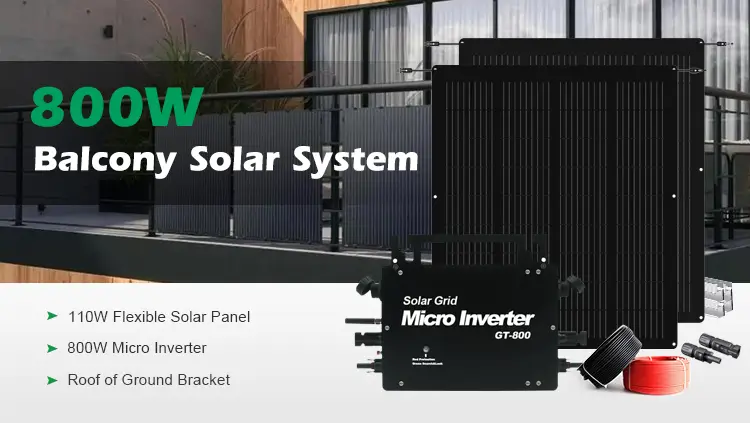
The Sunway Micro Complete 800W Balcony Solar System fits apartments and small urban solar use where roof access is limited. Its configuration includes 8 pieces of 110W flexible solar panels, 1 piece of 800W micro inverter with a 2m AC cable and user manual, 4mm2 red and black PV cables, optional fasteners, and carton packing.
This 800W balcony solar system is designed around railing panels, microinverter conversion, app tracking, and grid interaction. When the apartment load rises above solar output, the grid can supply extra power. Where local rules allow, surplus solar power may also be pushed back to the utility meter.
The product should still be matched to balcony direction, shading, railing type, and local grid requirements. Sunway supports solar panels, solar inverters, energy storage batteries, on-grid systems, off-grid systems, hybrid systems, and photovoltaic energy storage solutions, but product choice should begin with the real installation site.
Buyer Checklist for Apartment Balcony Solar Projects
| Check Item | Why It Matters | What Buyers Should Confirm |
| Balcony space | Determines panel layout | railing length, shade, panel position |
| Panel type | Affects weight and installation | flexible panel size, wattage, fixing holes |
| Microinverter | Converts DC to AC | rated output, cable length, grid compatibility |
| Mounting method | Affects stability | fastener type, railing material, wind exposure |
| Storage option | Affects later use | daytime use, evening use, backup need |
| Local rules | Affects legal operation | plug-in limit, meter type, building approval |
| Monitoring | Helps track value | app tracking, solar yield, load data |
Common Mistakes When Choosing a Balcony Solar System
One mistake is expecting balcony solar to perform like a full rooftop project. Apartment systems are smaller and should be planned for partial electricity offset.
Another mistake is ignoring shade and angle. A small shadow can reduce useful output, especially on balconies with nearby walls or railings.
A third mistake is adding solar battery storage before checking daily use. If most power is used during the day, a simpler setup may be enough. If solar use is needed after sunset, storage can be reviewed.
Plan a Balcony Solar System That Fits Your Apartment Space
A good apartment system starts with the balcony, not the product catalog. Share your balcony size, sunlight direction, shading condition, railing type, local grid rule, and daily power goal with us. We can help review whether an 800W balcony system or another small energy storage system configuration is suitable for your apartment project. Send your balcony project details to start a practical review.
FAQ
Q:Can a balcony solar system power a whole apartment?
A:Usually not. A balcony solar system is mainly used to offset part of the daily grid consumption. Actual output depends on sunlight, panel angle, shading, microinverter capacity, and local grid rules.
Q:Do I need battery storage for an apartment solar system?
A:It depends on when electricity is used. If most power use happens during the day, panels and a microinverter may be enough. If more solar power is needed in the evening, solar battery storage may add value.
Q:What should buyers check before choosing an 800W balcony solar system?
A:Buyers should check balcony space, sunlight direction, shading, railing strength, wind exposure, microinverter output, PV cable layout, local grid rules, and whether battery storage is needed.