

How to size a battery energy storage system for large commercial buildings in 2026?
Time : May 05, 2026 View : 851
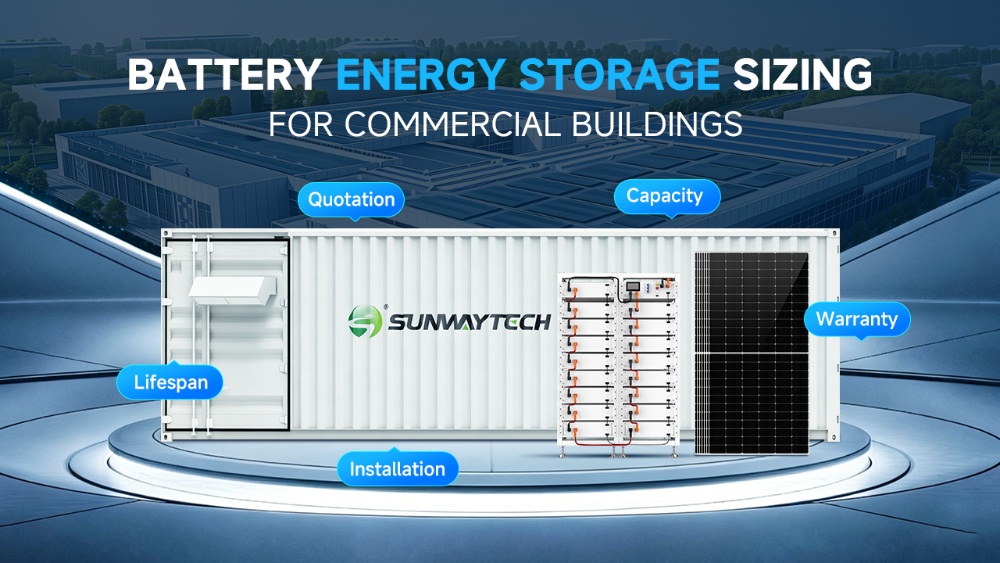
Sizing a battery energy storage system for a commercial building involves more than choosing a cabinet with a larger kWh rating. A useful design begins with the building’s real load profile. It also considers peak demand, backup goals, solar setup, tariff details, phase type, available space, and plans for later growth. In 2026, more commercial and industrial sites will include storage because power prices vary more, solar PV systems appear in more places, and many facilities require better protection from outages.
A properly sized energy storage system can lower peak grid use. It can hold solar energy for use afterward. It can also back up vital loads during blackouts and improve routine energy management. The best-fit design matches actual working situations, supports the business aim, and allows space for later expansion without unnecessary expense.
Why commercial buildings need battery storage in 2026
Commercial buildings consume electricity in ways that differ from homes. Offices, shops, farms, hotels, cold storage units, industrial facilities, and manufacturing plants often operate for extended periods. They rely on equipment that must keep running to avoid financial loss or safety issues. Many locations also employ three-phase power for HVAC units, pumps, compressors, motors, and manufacturing tools.
This explains why commercial battery storage systems now form part of energy strategies. They go beyond emergency support. Such a system can aid peak shaving, solar self-use, charging during low-cost times, and short-term power continuity. For companies dealing with high demand fees or unreliable supply, battery storage can reduce energy risk.
Peak demand ranks as one of the first concerns to examine. Numerous commercial power bills feature demand fees based on the top grid power draw noted in a billing cycle. A building might generate an expensive peak when HVAC units, refrigeration equipment, pumps, and manufacturing tools run at the same time. Battery storage can release energy during those heavy-load periods. This action reduces part of the power taken from the grid.
Backup power needs planning focused on essential loads. It should not cover the whole building automatically unless the budget and operation require it. Key loads might include emergency lights, security systems, cooling systems, servers, communication tools, entry controls, payment systems, and certain production controls. This approach prevents overdesign and suits buildings that require several hours of support or controlled operation during outages.
Step 1: collect real load data before choosing capacity
The initial step in sizing a battery energy storage system involves gathering trustworthy load data. Without such data, the system might prove too small to handle main equipment. Or it could end up too big to offer a fair return.
A commercial building should gather twelve months of utility statements. Include the highest monthly demand in kW. Add daily and seasonal energy consumption in kWh. Include 15-minute or hourly load details if possible. The design group should also check critical machines, motor start needs, current or intended solar PV size, grid voltage, phase type, needed backup time, outdoor installation space, interconnection conditions, and upcoming load increases like EV chargers, cooling improvements, or new manufacturing tools.
This data distinguishes average load from peak load. It also reveals if the primary aim is lowering costs, providing backup, storing solar energy, or a mixed energy approach.
kW and kWh must be calculated separately
A frequent sizing mistake confuses kW with kWh. kW gauges how much power the system can provide at once. kWh gauges how much energy the battery can hold.
For instance, a large facility might require 800 kW of power for vital machines. But it may only need support for two hours. In that situation, the basic energy demand is around 1600 kWh before losses, usable capacity restrictions, and safety buffer. If the same facility requires longer backup, the needed battery size grows.
A proper energy storage system design verifies both figures. Battery capacity by itself falls short if the inverter cannot handle the required load. Inverter power by itself also falls short if the battery cannot maintain the needed runtime.
Step 2: define the main use case
A commercial battery project should begin with a clear use case. Various goals result in different system scales, control options, and cost outlooks.
For peak shaving, the battery requires sufficient power and energy to reduce the top grid draw during costly demand times. For solar battery storage, the aim often centers on holding extra solar output during daylight. Then, it involves using that energy later. This matters especially when a building cannot use all the solar power at production time. For backup power, the system must fit around vital loads and anticipated outage length.
For industrial battery storage, load patterns can prove more challenging. Motors, compressors, pumps, welding tools, process setups, and large HVAC systems may produce high initial current or abrupt load shifts. The inverter, battery group, and control setup must manage these situations with steady output.
Step 3: estimate battery capacity and inverter power
A basic starting formula is:
required battery capacity = critical load power × backup hours ÷ usable battery percentage
If a building requires 600 kW of critical load support for two hours, the fundamental energy need is 1200 kWh. The final system capacity should generally be larger. This is because batteries should not always drain to their complete rated level. System losses, temperature impacts, battery wear, and future expansion should also factor in.
For numerous commercial and industrial buildings, a 15% to 30% safety buffer can render the design more durable. The precise buffer relies on budget, load steadiness, setup conditions, temperature range, interconnection requirements, and the value of backup power to regular work.
Battery capacity sets runtime. Inverter power sets what the system can truly operate. A facility with a large battery bank might still struggle to handle the load if the PCS or inverter output is insufficient. A strong converter with limited battery capacity might handle the load only briefly.
Many commercial buildings utilize three-phase equipment. HVAC units, elevators, pumps, compressors, and industrial devices often demand reliable three-phase output. In such cases, the storage design should align with the building’s phase needs, voltage, ongoing load, and brief peak patterns. Larger systems may also need closer checks on grid connection, protection design, transformer isolation, monitoring, and site maintenance access.
Step 4: consider solar input and charging strategy
If the building has solar panels already or intends to add them, the battery should fit with solar output in mind. A useful solar battery storage design compares solar creation with the building’s load pattern.
A building that uses most solar power in daylight may require a smaller battery. A building with robust midday solar yield but greater evening use may need more storage space. A location with time-of-use rates may also gain from charging off-peak from the grid. Then, it can discharge during high-tariff periods.
For various commercial and industrial locations, the best approach mixes solar charging, off-peak charging, and peak shaving. This can boost daily energy savings while maintaining backup capacity for vital loads. For projects that include solar integration, hybrid function, or high-load commercial setup, checking practical energy storage solutions can assist in linking system design with real site situations.
Step 5: choose battery chemistry and system architecture
Battery chemistry influences safety, lifespan, heat patterns, and upkeep demands. Lithium iron phosphate, commonly known as LFP, sees wide use in commercial and industrial storage. It offers solid thermal stability and suits repeated charge and discharge cycles.
System architecture holds importance too. Modular cabinets and modular PCS design can ease transport, setup, upkeep, and later growth. For large commercial and industrial projects where footprint, deployment speed, and maintenance access count, outdoor cabinet or containerized design can simplify site planning and future capacity adjustments.
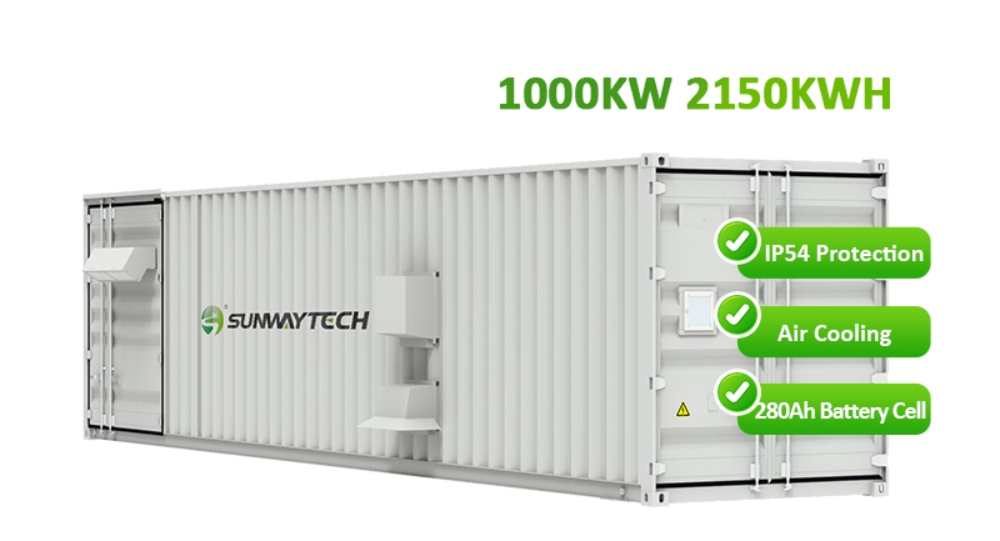
In large commercial, industrial, and utility-linked projects, the SUNWAY 1000kW 2150kWh ESS serves as an example of a containerized outdoor energy storage system for high-load applications. It pairs 2150 kWh of battery storage with rated/maximum AC power of 1000/1100 kW. The system integrates battery storage, modular PCS, EMS, power distribution, environmental control, and fire protection. It uses LFP cells, supports RS485/CAN communication, adopts intelligent air cooling, and is built around modular PCS architecture for maintenance and capacity expansion.
This kind of setup matches facilities that need MW-level peak shaving, high-capacity backup power, solar-plus-storage operation, or grid-support capability. It is more suitable for large commercial buildings, industrial facilities, energy parks, cold storage bases, and utility-linked projects than for small backup applications.
Step 6: avoid common sizing mistakes
A commercial energy storage system should rest on engineering reasoning. It should not rely solely on budget or listed capacity. Selecting kWh prior to verifying peak load counts as one typical error. A large battery does not fix all issues if the converter cannot manage the real load. Supporting the entire building without load ranking is another problem. Dividing critical and non-critical loads usually yields a superior design.
Tariff details matter as well. Demand fees, time-of-use rates, export guidelines, and grid dependability can all alter the ideal system scale. Commercial buildings might also introduce EV chargers, control systems, bigger cooling tools, or additional production lines. For larger sites, space for outdoor cabinets, fire protection, monitoring interfaces, and maintenance access should also be reviewed before the design is finalized.
At Sunway, we typically see sizing as a balance among present load, future increases, backup expectations, site limits, and interconnection conditions. For larger projects, outdoor footprint, PCS capacity, fire protection, thermal management, and monitoring interface also need to be checked before the final configuration is selected.
Final checklist before requesting a system design
Before seeking a quote, assemble monthly power bills, peak demand notes, load pattern data if on hand, critical load roster, needed backup length, solar PV size, grid voltage and phase type, setup surroundings, space for battery cabinets or containers, interconnection requirements, fire protection requirements, and future growth outline.
With these elements, an engineering group can provide a more precise suggestion for solar battery storage, peak shaving, backup power, or hybrid function. For commercial and industrial sites starting a new effort, share your load profile and backup target so our team can assist in examining the power demand, solar situations, grid connection needs, and fitting energy setup.
Conclusion
Sizing a commercial battery system in 2026 demands more than choosing a battery cabinet from a catalog. The method should start with load data. Then, it should proceed to backup time, peak demand, converter power, solar charging approach, battery chemistry, installation environment, and grid connection needs.
A correctly sized system can decrease peak demand. It can boost solar power application. It can sustain main loads during outages. It can also give commercial and industrial facilities greater command over energy expenses. The most effective design matches actual working situations and provides sufficient room for future expansion.
FAQ
Q: What size battery storage system does a commercial or industrial building need?
A: The needed size hinges on peak load, vital equipment, backup time, solar creation, usable battery level, and power rate setup. A smaller commercial site may need brief support for key systems, while a factory, cold storage base, or utility-linked site may need higher converter power and extended runtime.
Q: Is kW or kWh more important for commercial battery sizing?
A: Both hold value. kW sets how much load the system can manage at once. kWh sets how long the battery can deliver that load. A solid design must align both values with the building’s actual power pattern.
Q: Can large battery storage reduce commercial electricity costs?
A: It can assist when the system fits in size and control. Storage might lower demand fees, move solar power to higher-price times, and offer backup for vital loads. The real gain depends on local rates, solar yield, load patterns, and system layout.