

Air-Cooled vs. Liquid-Cooled Commercial Battery Storage: Which Is Better for C&I Projects?
Time : Jul 20, 2026 View : 854
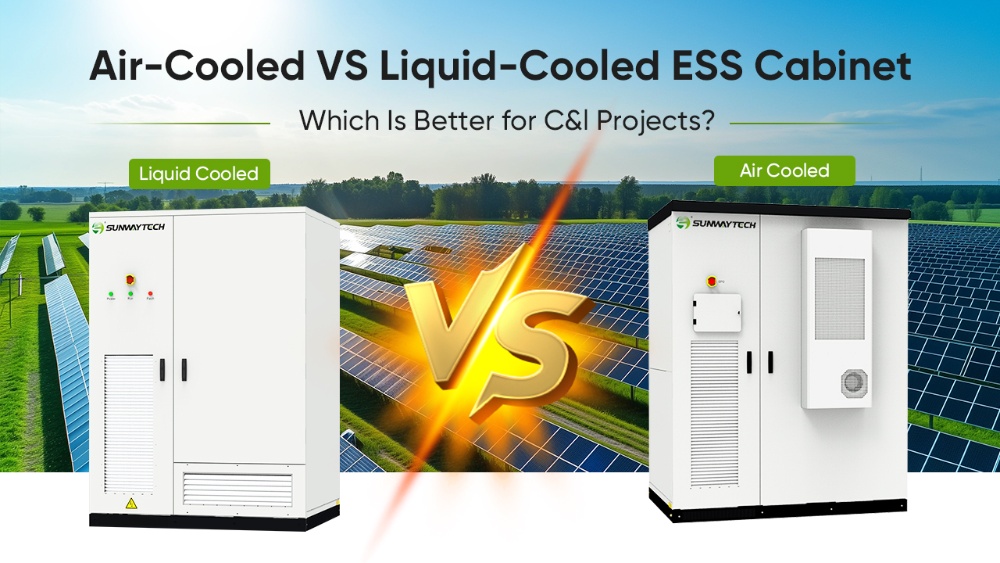
Cooling should not be regarded as a secondary cabinet specification. In factories, warehouses, hotels, charging sites, and commercial buildings, thermal management influences battery temperature consistency, cabinet layout, maintenance requirements, and performance under demanding charge-discharge schedules.
Neither method is automatically superior. Air cooling may suit moderate climates and predictable cycling. Liquid cooling may be better suited to compact cabinets, frequent cycling, and projects operating in high ambient temperatures. The correct choice depends on the duty cycle, installation environment, service capability, and lifecycle priorities of the project.
Why Does Cooling Matter in a Battery Energy Storage System?
A battery energy storage system produces heat whenever cells charge or discharge. The thermal load changes with current, cycle frequency, ambient temperature, cabinet density, and module condition. Cooling is therefore part of system control, not only enclosure comfort.
Temperature Variation Affects Usable Performance
Battery modules do not always heat at the same rate. Airflow paths, direct sun, nearby electrical equipment, and module position can create warmer areas. If temperature differences become excessive, the control system may reduce output or apply protective limits.
Good thermal design keeps modules within their permitted range and limits avoidable variation. Cooling alone does not determine service life. Cell quality, depth of discharge, C-rate, state-of-charge limits, BMS settings, installation quality, and maintenance remain important.
C&I Sites Create Different Thermal Demands
Two cabinets with the same kWh rating may need different cooling methods. An office may complete one controlled cycle per day. A factory may discharge repeatedly during production peaks and recharge when tariffs fall or solar generation rises.
Industrial battery storage should therefore be evaluated against the operating schedule, not capacity alone. Peak power, expected cycles, seasonal temperature, dust, humidity, altitude, and maintenance access all influence the decision.
How Do Air-Cooled and Liquid-Cooled ESS Remove Heat?
Both methods move heat away from battery modules. Their value depends on how well the whole cabinet is engineered and maintained.
Air Cooling Uses Controlled Airflow
An air-cooled ESS relies on fans, ducts, ventilation paths, or an HVAC unit. These parts distribute conditioned air throughout the battery modules. The controller changes fan speed or cooling output as temperatures increase.
Its maintenance tasks typically focus on fans, filters, vents, and HVAC components. They can examine fans, filters, vents, and air-conditioning components without any need to handle coolant. Air cooling can be effective in moderate climates and lower-density cabinets when the airflow reaches all battery modules.
Compact arrangements, blocked filters, dust, humidity, or elevated ambient temperatures can make the airflow harder to manage. Teams must also allocate space for proper circulation. This need influences the enclosure size and the placement of components.
Liquid Cooling Brings the Cooling Medium Closer
A liquid-cooled ESS moves coolant through pipes and cold plates near the battery modules. A pump circulates the fluid, and a heat exchanger removes collected heat. Sensors regulate the loop based on operating demand.
This direct heat-transfer path can support more uniform temperature control in compact, high-density cabinets. It is often considered for frequent cycling and demanding outdoor sites.
The system is more involved. Pumps, coolant, seals, pipes, sensors, and heat exchangers must be included in commissioning and preventive maintenance. Clear service procedures and leak detection are essential.
When Does Air Cooling Make More Sense?
Air cooling remains practical where the site conditions match its simpler architecture.
Moderate Conditions and Predictable Cycling
A mild climate, sufficient cabinet clearance, and a stable daily schedule may not require a liquid loop. Air cooling can suit warehouses, workshops, commercial buildings, and photovoltaic self-consumption projects with moderate cycling.
The design must still consider the hottest season and the most intensive production period. Cabinet placement, shading, ventilation, filter access, and expected derating should be reviewed before approval.
Familiar Maintenance Can Reduce Service Complexity
Projects far from specialist technicians may benefit from familiar HVAC components. Local teams can inspect fans, filters, ducts, and common cooling parts through a defined service plan.
Air cooling is not maintenance-free. Dust accumulation, worn fans, blocked inlets, and HVAC faults can reduce performance. Remote alarms and scheduled inspections remain necessary, especially for outdoor industrial battery storage.
When Is Liquid Cooling the Better Fit?
Liquid cooling becomes more attractive as thermal demand, cycling intensity, and cabinet density increase.
Hot Climates and Frequent Cycling
Factories using repeated peak shaving, charging sites with variable loads, and commercial facilities combining solar self-consumption with tariff arbitrage may cycle batteries more often than a backup-only system. Frequent power movement creates sustained heat.
A liquid-cooled architecture can be useful when the cabinet must manage this demand in high ambient temperatures. More even control can help the BMS keep modules within the intended operating window and reduce the chance that one warm area limits the wider system.
Higher Energy Density and Restricted Space
Liquid cooling generally requires less internal air volume around modules than a large airflow path. This can support compact layouts where a project needs substantial energy capacity but has limited installation space.
Where liquid cooling enables a more compact cabinet layout, the reduced footprint must not compromise maintenance access. Designers still need room for cooling equipment, electrical systems, fire protection, cable routes, isolation, and safe service work.
Which Cooling Method Fits the Project Conditions?
The comparison should connect technology to the operating profile rather than present liquid cooling as a universal upgrade.
|
Project factor |
Air-cooled ESS |
Liquid-cooled ESS |
|
Ambient conditions |
Moderate, controlled sites |
Hotter or more variable sites |
|
Cycling profile |
Lighter, predictable cycling |
Frequent or sustained cycling |
|
Cabinet layout |
Needs effective airflow space |
Supports compact, higher-density layouts |
|
Maintenance focus |
Fans, filters, ducts, HVAC |
Coolant, pumps, seals, pipes, sensors |
|
Main priority |
Familiar maintenance and lower complexity |
Temperature consistency and space efficiency |
Compare Lifecycle Needs, Not Purchase Price Alone
Initial cost is only one part of the decision. Owners should also examine auxiliary energy use, derating, preventive maintenance, spare parts, service response, downtime risk, and expansion plans.
Commercial battery storage for solar also requires a defined operating strategy. When the battery charges from midday PV and discharges during evening demand, the design should model the charging window, discharge duration, reserve level, and seasonal generation.
Build the Decision Around Site Data
Air cooling may suit a moderate climate, limited cycling, available cabinet space, and familiar local maintenance. Liquid cooling may fit better when temperatures are high, cycling is frequent, the footprint is restricted, or module temperature consistency is a higher priority.
The final choice should be supported by the load curve, tariff structure, solar generation, ambient conditions, grid voltage, discharge duration, critical loads, fire requirements, communications, and future capacity plan.
How Can Integrated Air-Cooled and Liquid-Cooled Cabinets Support Different Sites?
After the cooling method is selected, batteries, PCS, BMS, EMS, protection, thermal control, and communications must operate as one coordinated system. Integration reduces interface risk during deployment.
At Sunway, we configure systems around project power, operating conditions, and application objectives.Our C&I ESS portfolio includes air-cooled and liquid-cooled cabinets.
An Air-Cooled Configuration for Predictable C&I Loads
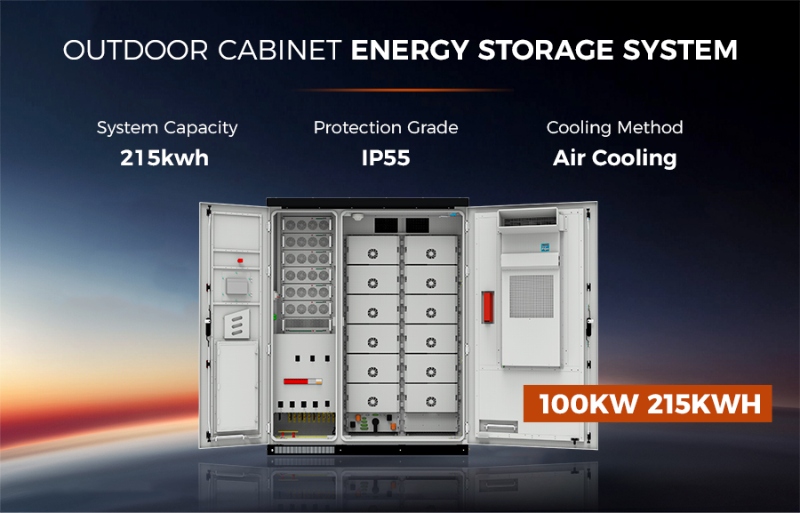
The Sunway 100kW/215kWh air-cooled ESS combines 215kWh LFP storage with 100kW rated AC output in an IP54 outdoor, front-service cabinet. Integrated PCS, EMS, BMS, power distribution, fire protection, CAN, Ethernet, and RS485 support operation. Intelligent air cooling and modular batteries can suit commercial buildings, workshops, and warehouses with predictable cycling and moderate thermal loads.
A Liquid-Cooled Configuration for Higher Thermal Loads
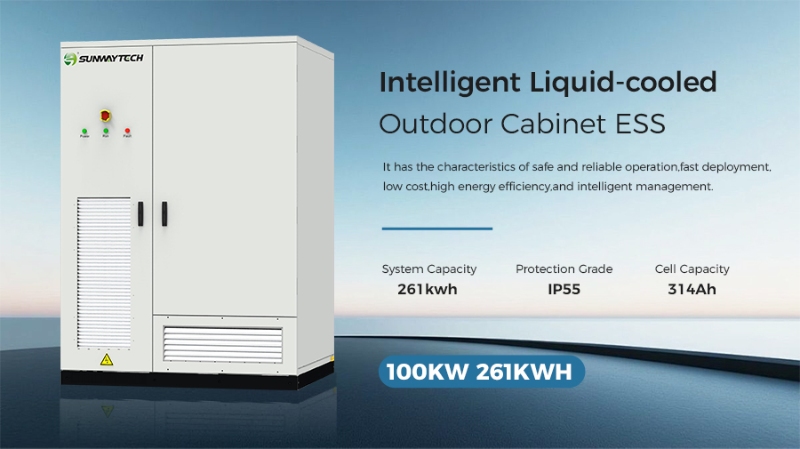
The Sunway 100kW/261kWh liquid-cooled ESS integrates 261kWh LFP storage, modular PCS, BMS, EMS, power distribution, fire protection, and environmental control. It delivers 125kW rated AC power, accepts 100kW PV input through two MPPT channels, and uses an IP55 outdoor enclosure. The operating range is -25°C to +60°C, with derating above 45°C.
This option can suit factories, logistics sites, and solar-plus-storage projects with frequent cycling, limited space, or demanding outdoor conditions. Factory assembly and pre-shipment testing can reduce site integration work, while commissioning must follow local requirements.
Capacity alone should not decide the choice. The 215kWh model favors a simpler air-cooling architecture and 100kW output. The 261kWh model adds higher stored energy, 125kW AC output, and direct liquid cooling for more demanding duty cycles. Final selection still depends on load data, ambient conditions, maintenance capacity, and operating strategy.
What Should Buyers Prepare Before Selecting a Cooling Method?
A useful proposal begins with real operating data. Monthly consumption alone is not enough for detailed C&I design.
Load, Environment, and Integration Data
Provide a 15-minute or 30-minute load curve when possible, together with peak demand, operating hours, motor loads, tariff windows, expected cycling, and backup reserve. Document maximum and minimum temperature, placement, solar exposure, dust, humidity, salt mist, altitude, noise limits, footprint, fire separation, and service access.
Confirm PV capacity, grid voltage, phase configuration, transformer arrangement, monitoring requirements, communication protocols, fire rules, and planned expansion. A battery energy storage system must operate as one coordinated platform, with the PCS, BMS, EMS, thermal system, and protection equipment exchanging reliable data.
Match the Cooling Method to the Duty Cycle
Air cooling is not an outdated choice, and liquid cooling is not a universal requirement. Air-cooled cabinets can be effective in moderate environments with lighter cycling and accessible maintenance. Liquid-cooled systems are often better suited to high thermal loads, compact layouts, demanding outdoor conditions, and frequent operation.
The strongest decision combines thermal requirements with load behavior, service access, electrical design, and lifecycle cost. For commercial battery storage for solar, the review should also cover PV timing, reserve policy, tariff periods, and seasonal generation.
Share the site location, load curve, peak demand, PV capacity, operating schedule, and installation conditions with us. We can compare cooling requirements, PCS power, usable energy, communications, and cabinet configuration, then turn your project data into a practical ESS proposal.
For further planning, read How C&I Energy Storage Helps Factories and Large Buildings Manage Peak Demand.
FAQ
Q: Is liquid cooling always better than air cooling for C&I battery storage?
A: No. Liquid cooling can provide more direct and uniform thermal control, but air cooling may suit moderate temperatures, predictable cycling, adequate ventilation, and projects that prioritize simpler maintenance.
Q: Does liquid cooling automatically extend battery life?
A: No cooling method guarantees battery life. Thermal control matters, but cell quality, operating temperature, depth of discharge, C-rate, BMS limits, system design, and maintenance also affect long-term performance.
Q: What information is required before selecting an ESS cooling method?
A: Buyers should prepare the load curve, peak demand, cycling plan, ambient temperature range, installation space, PV capacity, grid parameters, discharge duration, critical load reserve, fire requirements, communications, and local maintenance capability.