

Cómo dimensionar un sistema ESS comercial e industrial sin sobredimensionarlo ni subdimensionarlo.
Fecha: 10 de agosto de 2026 Vistas: 596
Un proyecto de almacenamiento comercial o industrial puede tener un rendimiento deficiente de dos maneras opuestas. Un sistema sobredimensionado puede dejar capacidad costosa sin usar durante largos períodos, mientras que un sistema subdimensionado puede alcanzar su límite operativo antes de que se complete el período pico, la ventana de respaldo o el objetivo de transferencia de energía. El tamaño correcto no es la batería más grande que la instalación pueda albergar, sino la combinación de potencia y energía que permite realizar una tarea operativa específica en las condiciones de la instalación.
Un proceso adecuado de dimensionamiento de sistemas de energía eléctrica para uso comercial e industrial comienza con la curva de carga, la estructura tarifaria, los límites de los transformadores, las cargas críticas y los planes de expansión confirmados. A continuación, separa la potencia en kW de la energía en kWh, teniendo en cuenta el estado de carga de reserva, las pérdidas, la gestión térmica y las prioridades de control.
Defina qué debe lograr el sistema de almacenamiento.
El dimensionamiento se vuelve más claro cuando el equipo del proyecto define primero el objetivo operativo. La reducción de picos de demanda, el desplazamiento horario, la captación de energía solar y el suministro de energía de respaldo pueden compartir una batería, pero cada una impone una demanda diferente de energía, energía útil y sincronización de despacho.
El recorte de picos sigue la forma del pico.
El inicio de una producción puede generar un pico de demanda repentino durante varios minutos. Otra instalación puede experimentar un período prolongado de alta carga durante varias horas. Ambas instalaciones pueden registrar la misma demanda máxima mensual, pero requieren configuraciones de almacenamiento diferentes.
La potencia nominal requerida debe reflejar la diferencia entre el pico de demanda no controlado y el nivel de importación a la red objetivo. La duración de dicha diferencia determina el requerimiento energético. Un sistema de alta potencia con energía limitada puede gestionar un breve arranque, pero no puede sostener un pico prolongado durante la tarde.
El desplazamiento temporal y la copia de seguridad comparten la misma reserva.
El sistema de tarificación por franjas horarias traslada la energía de un periodo de menor coste a uno de mayor coste. El sistema de reserva conserva la energía en caso de un apagón. Cuando se requieren ambas funciones, la energía reservada no puede considerarse disponible para su descarga diaria.
El equipo del proyecto debe definir el estado de carga mínimo, la potencia de carga crítica, la duración del respaldo y el momento en que debe detenerse el despacho económico. Sin este orden de prioridades, un sistema de almacenamiento de energía en baterías podría finalizar un ciclo tarifario temprano con energía insuficiente para cubrir el pico real o provocar una interrupción en la red.
Cree el conjunto de datos del sitio antes de seleccionar la capacidad.
Las facturas mensuales detallan las tarifas y la demanda registrada, pero no cuándo se producen los cambios de carga. Un diseño fiable requiere datos temporales que abarquen días de producción, periodos de baja demanda, fines de semana y temporadas.
Utilice datos por intervalos en lugar de totales mensuales.
Un perfil de carga de 15 o 30 minutos puede revelar la carga base, la magnitud máxima, la duración, los aumentos de carga repetidos, los periodos de apagado y el tiempo de carga. Para la planificación de sistemas de almacenamiento de baterías comerciales, estos detalles son más importantes que el consumo anual por sí solo.
Cuando se utiliza generación in situ, su producción debe considerarse dentro del mismo cronograma. Un período prolongado de excedente puede requerir más energía utilizable, mientras que un excedente puntual e intenso puede requerir mayor potencia de carga. La comparación también muestra si la energía almacenada tiene una utilidad posterior.
Agregar restricciones de aranceles, cuadrícula y crecimiento
Se debe analizar el perfil de carga considerando los periodos tarifarios, las reglas de tarificación por demanda, la potencia del transformador, los límites de la red, la tensión local y los requisitos de protección. Las líneas de producción confirmadas, los equipos de refrigeración, los cargadores de vehículos eléctricos o las jornadas de funcionamiento prolongadas también deben tenerse en cuenta en el diseño.
Comprar pensando en todas las posibles cargas futuras puede dar lugar a un proyecto sobredimensionado. El crecimiento confirmado debe tenerse en cuenta en el cálculo, mientras que la expansión menos segura se gestiona mejor mediante el espacio reservado, las rutas de cableado, la capacidad de los equipos de conmutación y la arquitectura modular.
Tamaño (kW y kWh) como decisiones separadas
La potencia y la energía están relacionadas, pero no son intercambiables. Un sistema de almacenamiento de energía comercial e industrial debe suministrar suficiente potencia y mantenerla durante el período requerido.
kW define cuánta carga puede soportar el sistema.
La potencia nominal afecta la reducción de picos de demanda, la velocidad de carga, el soporte de cargas críticas y la respuesta de despacho. Si la instalación debe reducir la importación de la red en 700 kW, un sistema de 400 kW no podrá cumplir el objetivo, incluso con una gran reserva de energía.
Los motores, compresores, bombas y cargadores rápidos pueden generar picos de demanda breves que los datos horarios podrían ocultar. La evaluación debe analizar la demanda constante, las cargas de alta potencia de corta duración y las condiciones de arranque.
kWh define cuánto tiempo puede continuar el soporte
La capacidad energética determina la duración de la descarga. Un objetivo de 500 kW con una duración de dos horas requiere mucha más energía útil que la misma potencia con una duración de veinte minutos. Los cálculos de respaldo siguen el mismo principio, pero deben utilizar el perfil de carga crítica en lugar de la carga total conectada de la instalación.
La energía nominal no es totalmente gestionable. Los requisitos de reserva, los límites operativos, el consumo auxiliar y la temperatura reducen la energía disponible en un día determinado. Por lo tanto, el diseño debe distinguir entre la capacidad nominal y la capacidad útil de almacenamiento de la batería.
Ajusta la relación a la curva de carga.
Una configuración útil refleja el problema operativo. Los picos de demanda cortos generalmente requieren proporcionalmente más energía. Los periodos de tarifa prolongada, las cargas de producción sostenidas o los periodos de respaldo extendidos requieren más energía.
Las simulaciones de días representativos deberían comprobar si el sistema alcanza el estado de carga mínimo demasiado pronto, permanece completamente cargado mientras continúa la oportunidad de recarga o almacena energía no utilizada después del período previsto. Estas comprobaciones facilitan la justificación de la capacidad de almacenamiento de la batería propuesta.
Convertir la capacidad nominal en capacidad de despacho.
El rendimiento del proyecto depende de la energía disponible una vez aplicados los límites operativos. Esta distinción es fundamental para evitar el exceso de capacidad y un tiempo de funcionamiento insuficiente.
Reserva protegida antes del envío diario
La reserva de respaldo, el estado de carga mínimo, el nivel de carga máximo y los ajustes de protección reducen la energía disponible para el funcionamiento habitual. Una planta de almacenamiento en frío o un proceso continuo pueden requerir una reserva mayor que una instalación con cargas flexibles.
La reserva debe provenir de una evaluación de carga crítica. Un porcentaje genérico puede dejar muy poca energía para los equipos esenciales o reservar más capacidad de la que requiere el proyecto.
Incluir pérdidas y consumo interno.
La carga, la descarga, la refrigeración, los controles, los transformadores y el funcionamiento en modo de espera consumen energía. Estos valores deben basarse en la configuración propuesta y el entorno del sitio, en lugar de un límite fijo.
El sistema de gestión energética (EMS) debe proteger el orden operativo: preservar la reserva de respaldo, controlar el límite de demanda, completar la descarga de la tarifa seleccionada y, posteriormente, absorber la generación in situ disponible cuando aún haya margen de carga. Unas prioridades claras impiden que un objetivo utilice la energía reservada para otro.
Prueba de sobredimensionamiento y subdimensionamiento
Antes de realizar un pedido, conviene comprobar el sistema de almacenamiento de energía comercial e industrial propuesto en varios periodos de funcionamiento representativos. Un solo día de máxima demanda no es suficiente, y un solo día de baja demanda puede resultar igualmente engañoso.
Señales de sobreconstrucción
Entre las posibles señales se incluyen la energía no utilizada tras el periodo previsto, una capacidad de producción que la instalación rara vez necesita y la adquisición de capacidad de expansión sin un plan de carga confirmado. El tamaño excesivo también puede incrementar los costes de cimentación, cableado, aparamenta, protección contra incendios y mantenimiento.
Un bajo consumo energético por sí solo no demuestra una sobreconstrucción. Un sistema centrado en la resiliencia puede ahorrar energía intencionadamente. La clave reside en comprobar si la potencia y la energía instaladas se ajustan al objetivo declarado.
Señales de tamaño insuficiente
Un sistema de tamaño insuficiente puede alcanzar el estado de carga mínimo antes de que finalice el pico de demanda, reducir solo una parte del objetivo de demanda o llenarse demasiado pronto mientras aún hay energía disponible a bajo costo o excedente. El funcionamiento de respaldo y el de la tarifa también pueden entrar en conflicto, ya que ambos dependen de la misma reserva limitada.
El diseño debe probarse en condiciones de alta carga, baja generación, altas temperaturas, fines de semana y variaciones estacionales. Una configuración que solo funciona en un día favorable no constituye una inversión fiable.
Planifica la expansión sin pagarla demasiado pronto.
La escalabilidad debe respaldar un plan de desarrollo realista, no justificar una compra inicial innecesariamente grande. La primera etapa debe satisfacer las necesidades actuales, al tiempo que contempla la posibilidad de ampliar la capacidad de generación de energía.
Para sitios más pequeños con requisitos de almacenamiento de hasta 100 kWh, Sunway's gama residencial ess Proporciona una referencia de menor capacidad, mientras que las instalaciones más grandes deben evaluarse a través de una plataforma C&I.
Las líneas de producción confirmadas, los cargadores planificados o las ampliaciones aprobadas pueden incorporarse al proceso de diseño. Los proyectos menos definidos se gestionan mejor mediante infraestructura reservada y arquitectura modular. La expansión aún requiere capacidad de conexión en paralelo, capacidad de aparamenta, altura libre para transformadores, rutas de cableado, capacidad de comunicación, distancia de seguridad contra incendios y acceso para mantenimiento.
Dónde se instala un sistema refrigerado por aire de 1 MW / 2 MWh
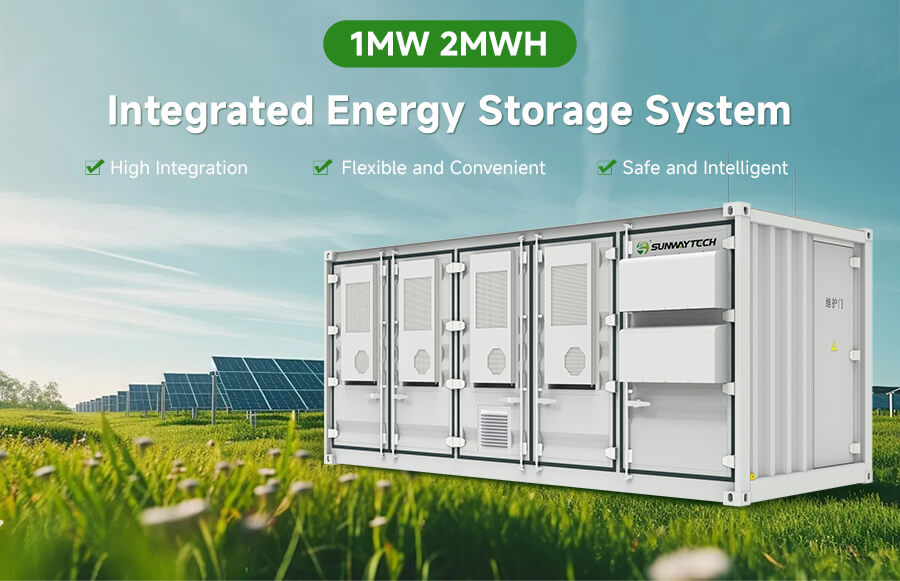
Para instalaciones con una ventana de gestión de la demanda sostenida, la clase de 1 MW / 2 MWh puede proporcionar una referencia útil. SunwayOfrecemos sistemas de almacenamiento de energía para uso residencial, comercial, industrial y de servicios públicos, adaptados a diferentes necesidades de potencia, energía, control y emplazamiento.
El Sistema de almacenamiento de energía en contenedor refrigerado por aire de 1 MW / 2 MWh Utiliza el modelo SW-20C-1000(2MWh)-A. Proporciona una potencia nominal de CA de 1000 kW, una potencia máxima de CA de 1100 kW y ocho grupos de baterías LFP de 253,2 kWh. La carcasa IP54 integra baterías, arquitectura modular PCS, distribución de energía, control de temperatura, protección contra incendios, comunicación de monitorización, un transformador de aislamiento y gestión de energía. El compartimento de baterías utiliza aire acondicionado y refrigeración, mientras que el compartimento eléctrico utiliza refrigeración por aire inteligente.
El sistema admite la reducción de picos de demanda, la respuesta a la demanda, el suministro de energía de respaldo, la compensación de potencia activa y reactiva, y la programación de la red. Su arquitectura modular PCS permite la expansión lineal y el control independiente en múltiples paquetes de baterías. Estas funciones solo son relevantes cuando la carga justifica la escala. Un pico pequeño y de corta duración no debe asignarse a una plataforma de 1 MW simplemente porque esté disponible.
Convierta los datos de carga en una configuración defendible.
Un informe de proyecto completo debe incluir datos de carga por intervalos, periodos tarifarios, potencia del transformador, objetivo de demanda máxima, cargas críticas, duración del respaldo, área de instalación y planes de expansión confirmados. Con esta información, podemos analizar la potencia de descarga, la duración operativa, la política de reserva y la capacidad de almacenamiento de baterías comerciales antes de comprometernos.
Envíe los datos de su proyecto para una revisión de configuración. y diseñar el sistema en función de las necesidades operativas medibles, en lugar de basarse en estimaciones de capacidad. El diseño final debe soportar las cargas actuales, contemplar una trayectoria de expansión realista y evitar el pago de energía que la instalación probablemente no utilice.
Para ver más de cerca cómo responde el almacenamiento a los picos de demanda cortos y a los períodos sostenidos de alta carga, lea Cómo el almacenamiento de energía para el sector comercial e industrial ayuda a las fábricas y a los grandes edificios a gestionar la demanda máxima.Explica cómo la duración máxima, la potencia de salida del sistema, la capacidad útil de la batería y la reserva de respaldo afectan el rendimiento del control de la demanda.
Preguntas frecuentes
P: ¿Se puede dimensionar un sistema de ahorro energético comercial e industrial (C&I ESS) a partir del consumo mensual de electricidad?
A: El consumo mensual no es suficiente. Se necesitan datos de carga por intervalos para identificar la potencia máxima, la duración, los periodos de carga, la variación diaria y los cambios estacionales. También se deben incluir las tarifas, los límites de los transformadores, los requisitos de reserva y las cargas futuras.
P: ¿Cuál es la diferencia entre la potencia nominal y la capacidad de almacenamiento de la batería?
A: La potencia nominal en kW define la carga máxima que el sistema puede soportar en un momento dado. La capacidad en kWh define la duración de dicha carga. Ambas deben coincidir con la curva de carga y el objetivo operativo.
P: ¿Se puede ampliar un sistema de almacenamiento de energía en baterías después de su instalación?
A: La expansión puede ser posible si el diseño original ofrece capacidad de funcionamiento en paralelo, margen eléctrico, capacidad de comunicación, espacio para la instalación, refrigeración, protección contra incendios y una arquitectura de batería compatible. Estas condiciones deben confirmarse durante la fase de diseño inicial.