

Quali sono le principali differenze tra sistemi di accumulo energetico off-grid, connessi alla rete e ibridi?
Data: 1 settembre 2026 Visualizzazioni: 505
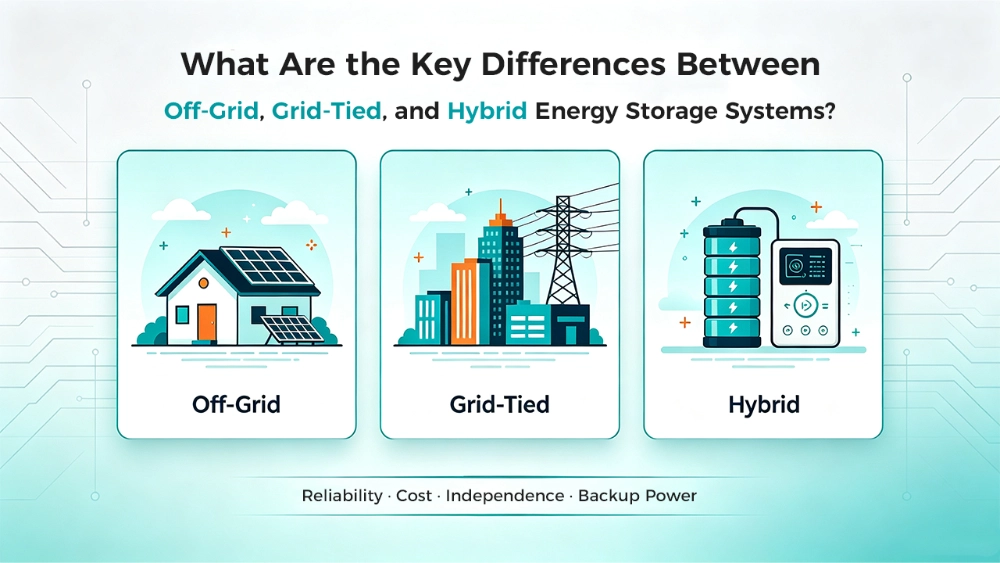
I sistemi di accumulo energetico off-grid, grid-tied e ibridi si differenziano principalmente per la connessione alla rete e la risposta alle interruzioni. Un sistema off-grid opera in modo indipendente. Un sistema grid-tied può interrompere l'alimentazione ai carichi in caso di guasto della rete. Un sistema ibrido combina l'interazione con la rete con un funzionamento isolato controllato. La scelta dipende dall'accesso alla rete, dalla criticità del carico, dagli obiettivi operativi e dalla continuità richiesta.
Quali sono le caratteristiche distintive di ciascun sistema di accumulo di energia?
Ogni sistema di accumulo di energia a batteria può includere generazione locale, apparecchiature di conversione di potenza e sistemi di controllo. La questione fondamentale è se la rete elettrica stabilisca tensione e frequenza, se sia il sistema di accumulo a definirle, o se siano necessarie entrambe le modalità.
sistemi di accumulo di energia off-grid
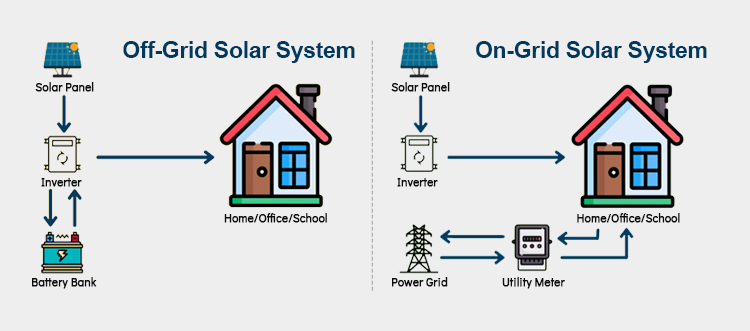
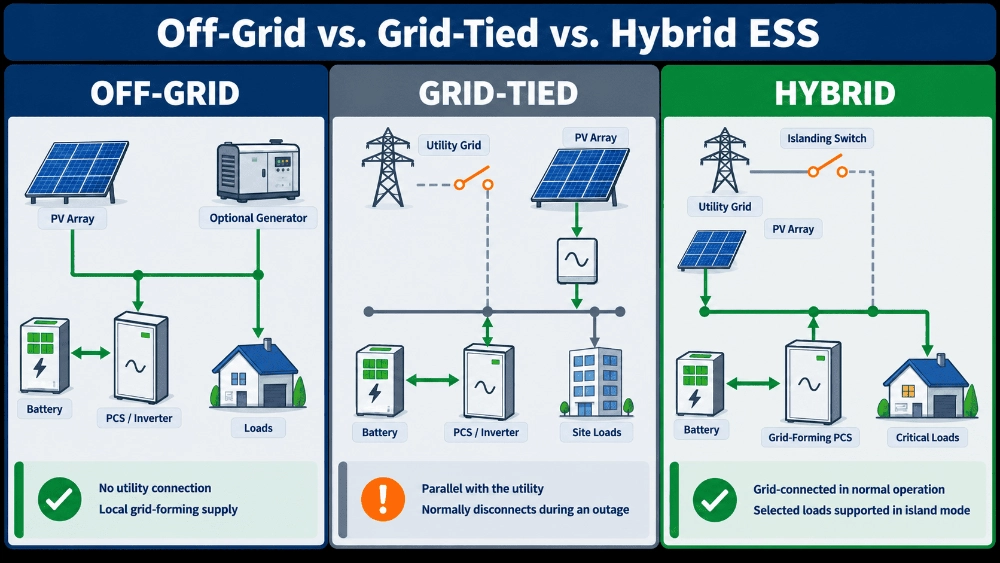
Un sistema di accumulo di energia off-grid, detto anche sistema di alimentazione autonomo, non dipende operativamente dalla rete elettrica pubblica. Normalmente combina la produzione locale con l'accumulo tramite batterie. Un generatore può fornire supporto durante periodi prolungati di bassa produzione o per interventi di manutenzione.
In assenza di una rete elettrica stabilizzatrice, il sistema di conversione dell'energia deve fornire la corrente alternata. Esso controlla la tensione e la frequenza, bilanciando la produzione, l'energia erogata dalle batterie e la domanda. Il sistema di gestione dell'energia protegge lo stato di carica delle batterie e può disconnettere i carichi non critici quando necessario.
Questa architettura è adatta a siti di telecomunicazione remoti, aziende agricole, isole, microreti e impianti in cui l'estensione della rete elettrica non è praticabile. Il progetto deve garantire il servizio anche nella peggiore combinazione plausibile di domanda e disponibilità di energie rinnovabili per quel sito.
Sistemi di accumulo di energia connessi alla rete
Un sistema di accumulo di energia connesso alla rete, detto anche sistema di accumulo a batteria on-grid o connesso alla rete, opera in parallelo con la rete elettrica. Può caricarsi durante i periodi a basso costo o utilizzando l'energia solare in eccesso, per poi scaricarsi al fine di ridurre i picchi di consumo, ottimizzare i consumi in base all'orario o per l'autoconsumo. Può anche controllare il fattore di potenza o le importazioni, laddove le normative di misurazione e interconnessione lo consentano.
Il collegamento alla rete elettrica non crea automaticamente un sistema di backup a batteria. La protezione anti-isola impedisce alle apparecchiature di alimentare un circuito di rete scollegato. Senza un progetto di isolamento approvato, un quadro di controllo dei carichi critici, apparecchiature di commutazione e controlli adeguati, la batteria non continuerà ad alimentare i carichi durante un'interruzione di corrente.
I sistemi di accumulo connessi alla rete elettrica sono adatti a siti commerciali e industriali dotati di una rete affidabile e di obiettivi economici misurabili.
Sistemi ibridi di accumulo di energia
In questo caso, un sistema ibrido di accumulo di energia combina la connessione alla rete, l'accumulo a batteria, la generazione locale e la capacità di supportare carichi selezionati in modalità isolata. Questa architettura solare con accumulo si differenzia dai sistemi che combinano diversi mezzi di accumulo.
Durante il normale funzionamento, un sistema ibrido gestisce le importazioni, cattura l'energia solare in eccesso e rilascia energia durante i periodi di maggiore valore. In caso di interruzione della rete, una commutazione coordinata isola il circuito protetto. Un inverter di rete stabilisce la tensione e la frequenza per i carichi isolati prima della riconnessione controllata.
Questa flessibilità comporta requisiti di progettazione. Un inverter ibrido da solo non è un UPS. Il tempo di commutazione, la corrente di avviamento del motore, il coordinamento delle protezioni, la priorità del carico, la capacità di riavvio a freddo e le regole della rete locale devono essere compatibili con i requisiti di continuità.
Come si confrontano i sistemi off-grid, connessi alla rete e ibridi?
Il confronto pratico riguarda il flusso di potenza, il comportamento in caso di interruzione di corrente e la responsabilità progettuale, piuttosto che la sola batteria.
|
fattore decisionale |
sistema off-grid |
Sistema connesso alla rete |
Sistema ibrido |
|
Collegamento alla rete elettrica |
Nessuno |
Necessario per il normale funzionamento in parallelo |
Utilizzato durante il normale funzionamento, ma separabile durante un'interruzione di servizio. |
|
Obiettivo primario |
Alimentazione elettrica indipendente |
Gestione economica e funzioni correlate alla rete elettrica |
Gestione economica del carico di lavoro più capacità di backup pianificata |
|
Risposta all'interruzione di servizio |
Continua se la generazione, la carica della batteria e l'energia immagazzinata sono sufficienti |
Solitamente interrompe l'erogazione dei carichi a meno che non sia inclusa l'apparecchiatura per l'isolamento |
Isola i carichi selezionati e funziona in modalità isola, se progettato per farlo. |
|
Riferimento di tensione e frequenza |
Formato localmente dal PCS o dall'inverter |
Normalmente segue la griglia |
Segue la griglia quando è connesso e forma l'isola quando è separato |
|
Base per il dimensionamento della batteria |
Autonomia, variabilità delle fonti rinnovabili, carico di picco e riserva |
Tariffe, profilo di picco, surplus solare e dispacciamento mirato |
Servizio economico più potenza di carico critico, durata del backup e riserva |
|
Equipaggiamento aggiuntivo tipico |
Generazione locale, interfaccia generatore, gestione del carico |
Misurazione a livello di fatturazione o di controllo, controllo delle esportazioni, protezione della rete |
Trasferimento delle apparecchiature, distribuzione del carico critico, controlli per il funzionamento in isola e coordinamento della protezione. |
|
Principale rischio di progettazione |
Energia insufficiente durante i periodi di bassa produzione |
Risparmi previsti o funzioni non supportate dai dati del sito o dalle regole della griglia |
Presupposti di backup che superano la capacità dell'inverter, della batteria o del sistema di commutazione. |
|
Vantaggio principale |
Fornitura indipendente laddove non sia disponibile l'accesso alla rete elettrica. |
Ottimizzazione dei costi senza complessità di isolamento |
Funzionamento economico più continuità di alimentazione programmata |
|
Principale limitazione |
Maggiore dipendenza dalla produzione e bilancio energetico basato sull'accumulo di energia |
Nessun supporto in caso di interruzione del servizio, a meno che non siano state progettate funzioni di backup. |
Maggiori requisiti in materia di apparecchiature di commutazione, controllo e messa in servizio. |
|
Fattore di costo principale |
Capacità di generazione, autonomia della batteria e generazione di riserva |
Potenza ed energia necessarie per l'adempimento dell'obbligo economico definito |
Capacità economica, riserva di interruzione, attrezzature di trasferimento e protezione |
Gli acquirenti dovrebbero valutare l'intero sistema di accumulo di energia a batteria, e non confrontare le batterie solo in base ai kilowattora nominali.
Cosa succede quando la rete elettrica si guasta?
Il comportamento in caso di interruzione di corrente dipende dalla modalità di controllo, dalla progettazione degli interruttori, dall'energia disponibile e dai carichi protetti.
Spegnimento in base alla griglia
La maggior parte degli inverter connessi alla rete utilizza la forma d'onda della rete elettrica come riferimento. Quando la tensione o la frequenza escono dall'intervallo consentito, la protezione anti-islanding disconnette il sistema. Non si può dare per scontato che una batteria carica fornisca un backup.
operazione di formazione della griglia sull'isola
Un inverter off-grid crea e regola l'alimentazione locale. Necessita di una potenza istantanea sufficiente per gestire i picchi di carico e gli avviamenti dei motori. La durata è determinata dalla capacità della batteria in kWh, mentre la potenza dell'inverter in kW limita la domanda simultanea.
Trasferimento ibrido controllato
Un sistema ibrido rileva la perdita di rete, apre il punto di connessione e alimenta un circuito isolato. A seconda dell'architettura e del tempo di trasferimento richiesto, è possibile utilizzare un interruttore di trasferimento automatico o statico. I sistemi di controllo sensibili potrebbero comunque necessitare di apparecchiature di continuità separate. La soluzione "senza interruzioni" non deve mai sostituire un tempo di trasferimento definito e un progetto monolinea approvato.
Come cambiano le dimensioni e i requisiti delle attrezzature?
La classificazione del sistema fornisce l'architettura, ma i dati del sito determinano le valutazioni. Potenza, energia utilizzabile e riserva devono supportare l'obiettivo operativo.
Dimensionamento di un sistema off-grid per l'autonomia
Il dimensionamento di un sistema off-grid inizia con un profilo di carico, la produzione da fonti rinnovabili, le condizioni stagionali, i distacchi di carico consentiti e l'autonomia. I progettisti dovrebbero separare i carichi essenziali da quelli flessibili, quindi testare i periodi di bassa produzione. Anche la potenza del generatore e la strategia di ricarica influiscono sulle dimensioni della batteria.
Dimensionamento di un sistema connesso alla rete per scopi economici
Il dimensionamento degli impianti connessi alla rete segue la curva di domanda e la tariffa. Un picco breve può richiedere un'elevata potenza ma un'energia limitata; un picco ampio richiede una scarica sostenuta. La cattura dell'energia solare dipende dalla tempistica di esportazione o di limitazione, non semplicemente dalla capacità fotovoltaica. Questa guida a dimensionamento commerciale e industriale Spiega perché kW e kWh necessitano di una valutazione separata.
Dimensionamento di un sistema ibrido per servizio e riserva
Il dimensionamento ibrido combina l'esigenza economica con i requisiti di riserva. La riserva per le interruzioni non può supportare anche il ciclo tariffario giornaliero. La progettazione deve definire la potenza del carico critico, la durata del backup, lo stato di carica minimo, la sequenza di riavvio e l'interazione con il generatore. Il sistema di gestione dell'energia applica le priorità in modo che un obiettivo non consumi la capacità assegnata a un altro.
Quale configurazione è più adatta al progetto?
La selezione si basa su vincoli di sito, qualità della rete, costi di interruzione, piani di espansione e regole di esportazione.
Siti remoti privi di accesso pratico alla rete elettrica
L'accumulo di energia fuori rete è una soluzione logica quando la rete elettrica è assente o i costi di estensione sono proibitivi. L'affidabilità dipende da un bilancio energetico prudente, da apparecchiature di facile manutenzione, dal monitoraggio remoto e da un piano per periodi prolungati di bassa produzione.
Siti collegati alla rete elettrica e focalizzati sul controllo dei costi.
I sistemi di accumulo a batteria connessi alla rete sono adatti a siti che privilegiano la riduzione dei picchi di consumo, il funzionamento a fasce orarie, l'autoconsumo o l'importazione e l'esportazione controllate. Evitano l'isolamento delle apparecchiature quando il backup non ha un valore commerciale rilevante. L'approvazione dell'interconnessione e la misurazione rimangono essenziali.
Siti che richiedono sia risparmio che continuità
I sistemi di accumulo di energia ibridi per uso industriale sono adatti a strutture in cui le interruzioni minacciano operazioni critiche. Esempi includono stazioni di ricarica, officine e processi industriali di piccole dimensioni. Solo i circuiti selezionati dovrebbero essere inclusi nella progettazione del backup; proteggere ogni carico può aumentare i costi e creare problemi di alimentazione all'avviamento. Sono disponibili opzioni più ampie tramite soluzioni di accumulo energetico.
Cosa dovrebbero verificare gli acquirenti prima di effettuare la scelta?
Prima dell'acquisto, gli acquirenti devono richiedere una descrizione operativa specifica del sito e verificare:
- l'obiettivo principale e la priorità quando diverse funzioni sono in competizione;
- Dati di carico con risoluzione temporale di 15 minuti o inferiore, inclusi i vincoli relativi a motori e trasformatori;
- energia nominale e utilizzabile della batteria, potenza dell'inverter, limiti di sovraccarico e stato di carica della riserva;
- capacità di formazione della rete, apparecchiature di trasferimento, circuiti di carico critici e tempo di trasferimento verificato;
- requisiti relativi alla protezione anti-islanding, alla limitazione delle esportazioni, alla protezione contro l'inversione di polarità e all'approvazione da parte delle aziende di servizi pubblici;
- Interfacce di comunicazione per BMS, PCS, EMS, contatori e generatori;
- temperatura di esercizio, grado di protezione dell'involucro, gestione termica, protezione antincendio e accesso per la manutenzione;
- Responsabilità di monitoraggio, risposta agli allarmi, test di collaudo e ambito di servizio.
Questa revisione impedisce che il termine "ibrido" si sostituisca a funzioni definite e aiuta i fornitori a stabilire prezzi per la stessa gamma di servizi.
Come si deve confermare l'architettura finale del sistema?
I valori nominali di potenza in kW e kWh di un prodotto non garantiscono la sua capacità di funzionare in modalità off-grid, di rimanere connesso esclusivamente alla rete elettrica o di trasferire determinati carichi in modalità isola. L'architettura finale deve definire le modalità operative del sistema di conversione di potenza (PCS), le apparecchiature di trasferimento, la distribuzione dei carichi critici, le impostazioni di protezione, la misurazione, l'interfaccia con il generatore e le priorità del sistema di gestione energetica (EMS).
A Sin modo inusualeLa selezione del sistema inizia con il profilo di carico del sito, le condizioni della rete, gli obiettivi operativi e la durata di backup richiesta. Questi dati determinano se una configurazione connessa alla rete, isolata o ibrida sia appropriata prima di selezionare le specifiche delle singole apparecchiature.
Conclusione
Un sistema di accumulo energetico off-grid deve essere in grado di funzionare in modo indipendente dalla rete elettrica. Un sistema di accumulo energetico connesso alla rete funziona con la rete elettrica e si disconnette normalmente in caso di interruzione di corrente. Un sistema di accumulo energetico ibrido aggiunge la possibilità di funzionamento in isola per determinati carichi, mantenendo al contempo le funzioni economiche legate alla connessione alla rete. La scelta giusta, quindi, è una decisione architetturale prima ancora di quella relativa alle batterie.
Obiettivi operativi chiari, dati del sito verificati e una sequenza di interruzione definita riducono sia il rischio tecnico che la capacità non necessaria. Per il supporto alla configurazione legato a un profilo di carico reale, Pianifica con il nostro team un sistema energetico più resiliente..
FAQ
D: Un sistema di accumulo di energia a batteria connesso alla rete può fornire energia di riserva durante un'interruzione di corrente?
R: Non automaticamente. Richiede un progetto di funzionamento in isola approvato, apparecchiature di conversione di potenza idonee per la formazione della rete, apparecchiature di trasferimento, protezione e un circuito di carico critico separato. Altrimenti, la protezione anti-isola normalmente lo disconnette in caso di guasto della rete.
D: Un sistema di accumulo di energia ibrido è sempre più adatto di un sistema autonomo o connesso alla rete?
R: No. La capacità ibrida aggiunge flessibilità, ma aggiunge anche controlli, apparecchiature di commutazione, attività di messa in servizio e costi. Un sito collegato alla rete affidabile e focalizzato solo sulla riduzione dei picchi di consumo potrebbe aver bisogno di un sistema connesso alla rete, mentre un sito remoto richiede un'architettura off-grid.
D: Cosa conta di più nel dimensionamento di un sistema di accumulo a batteria, i kW o i kWh?
A: Entrambi. I kW definiscono la quantità di carico che il sistema può servire o compensare in un dato momento. I kWh definiscono per quanto tempo può continuare a funzionare. I progetti off-grid e ibridi devono inoltre preservare energia di riserva per i periodi di bassa produzione o per le interruzioni di corrente.