

Batteriespeichersysteme (BESS): Funktionsweise, Hauptkomponenten, Vorteile und Zukunftstrends
Zeitpunkt: 24. August 2026 Aufrufe: 591
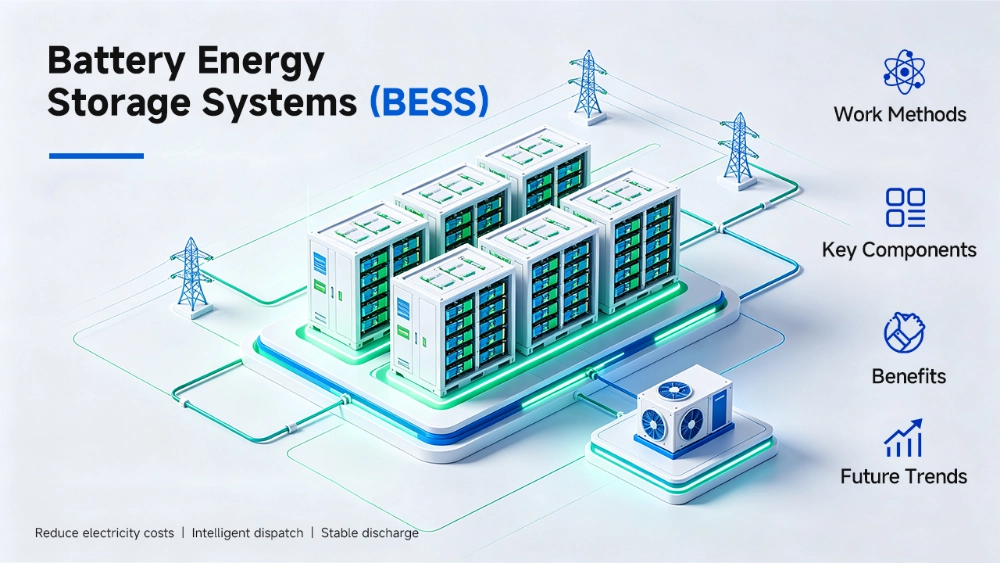
Ein Batteriespeichersystem speichert elektrische Energie und gibt sie bei Bedarf an Haushalte, Unternehmen, Anlagen zur Erzeugung erneuerbarer Energien oder das Stromnetz ab. Die Batterie ist jedoch nur ein Bestandteil eines vollständigen Speichersystems, das außerdem Energiewandlung, Überwachung, Energiemanagement, Temperaturregelung, Schutzmechanismen und Kommunikationssysteme benötigt.
Diese umfassendere Systembetrachtung erklärt, warum Batteriespeicher von der Notstromversorgung privater Haushalte über die Spitzenlastabdeckung in der Industrie bis hin zu netzgekoppelten Batteriespeichern eingesetzt werden. Ihr Wert liegt in der Kontrolle des Lade- und Entladezeitpunkts.
Was ist ein Batteriespeichersystem?
Ein Batteriespeichersystem (BESS) ist ein integriertes elektrisches System, das Energie in wiederaufladbaren Batterien speichert und diese bei Bedarf wieder abgibt. Seine Steuerungsarchitektur verbindet die Batterie mit Verbrauchern, dem Stromnetz, erneuerbaren Energiequellen oder anderen zugelassenen Energiequellen.
Worin unterscheidet sich ein komplettes Speichersystem von einer Batteriebank?
Eine Batteriebank besteht im Wesentlichen aus Zellen, Modulen oder Akkumulatoren, die so miteinander verbunden sind, dass sie die erforderliche Spannung und Kapazität bereitstellen. Ein komplettes Speichersystem umfasst auch die zugehörige Betriebsarchitektur.
Dieses System kann Batteriemanagement, Leistungsumwandlung, Energiemanagement, Schutzfunktionen, Kühlung, Brandschutz, Messtechnik und Kommunikationsschnittstellen umfassen. Eine Batterie speichert Energie; die Steuerung bestimmt, ob sie geladen, entladen, als Reservekapazität bereitgestellt oder das Stromnetz unterstützt werden kann.
Wie funktioniert die Batteriespeicherung vom Laden bis zum Entladen?
Der Betriebszyklus besteht aus drei miteinander verbundenen Phasen: Laden, Speichern und kontrolliertes Entladen.
Beim Laden wird verfügbare Energie in gespeicherte Energie umgewandelt.
Der Strom kann aus dem Stromnetz, aus Solaranlagen, Windkraftanlagen oder einer anderen zulässigen Energiequelle stammen. Das PCS steuert die bidirektionale Stromwandlung und den Ladevorgang. Das BMS überwacht Spannung, Stromstärke, Temperatur und Batteriestatus, um den Betrieb innerhalb der definierten Grenzen zu gewährleisten.
Ein Privathaushalt kann überschüssigen Solarstrom nutzen, während eine Fabrik in einer Zeit mit niedrigeren Stromtarifen Strom beziehen kann.
Die gespeicherte Energie unterliegt weiterhin Betriebsgrenzen.
Gespeicherte Energie entspricht nicht immer nutzbarer Energie. Ladezustand, Reservebedarf, Temperatur und Schutzgrenzen beeinflussen die abrufbare Leistung.
Zur Datensicherung kann ein Teil der Batteriekapazität reserviert bleiben. Zur Lastspitzenkappung kann das System Energie speichern, bis eine spätere Bedarfsspitze auftritt, anstatt sie sofort zu entladen.
Die Entladung folgt der Kontrollstrategie
Bei Energiebedarf wandelt das PCS den batterieseitigen Gleichstrom in Wechselstrom für Verbraucher oder das Stromnetz um. Das EMS steuert den Beginn der Entladung, die abgegebene Leistung und deren Beendigung. Diese Koordination ist wichtig, da mehrere Ziele dieselbe gespeicherte Energie nutzen können.
Was sind die Hauptkomponenten des Systems?
Die Hauptkomponenten erfüllen unterschiedliche Aufgaben, müssen aber zuverlässige Daten austauschen und als ein System reagieren.
Akkupacks und BMS bilden die Speicherschicht
Batteriezellen werden je nach Größe zu Modulen, Packs, Racks oder stapelbaren Einheiten zusammengebaut. Lithium-Eisenphosphat (LFP) findet breite Anwendung in stationären Speichern, wo Zyklenfestigkeit und thermische Stabilität entscheidend sind.
Das Batteriemanagementsystem (BMS) überwacht Spannung, Stromstärke, Temperatur, Ladezustand und anormale Zustände. Es hilft außerdem, Überladung, Tiefentladung und Betrieb außerhalb definierter Grenzen zu verhindern.
PCS und EMS steuern den Energiefluss
Das PCS (Power Supply Chain) übernimmt die bidirektionale Stromumwandlung zwischen Batterie- und Netzseite. Seine Nennleistung beeinflusst die Ladegeschwindigkeit und die maximale Last, die das System gleichzeitig versorgen kann.
Das Energiemanagementsystem (EMS) erfasst Daten vom Stromverteilungssystem (PCS), Gebäudeleitsystem (BMS), Zählern, Verbrauchern und anderen Geräten. Es kann das Laden und Entladen anhand von Nachfrage, Preisen, erneuerbarer Energieerzeugung, Reserveanforderungen oder Netzvorgaben planen.
Unterstützung des Betriebs von Wärme-, Brand- und Kommunikationssystemen
Speichersysteme können je nach Leistungsdichte und Umgebungsbedingungen natürliche, Luft- oder Flüssigkeitskühlung nutzen. Brandschutz, Schaltanlagen, Sensoren, Transformatoren und Verteileinrichtungen dienen der Steuerung und dem Schutz. CAN, RS485 und Ethernet übertragen Daten und Befehle zwischen den Geräten.
Was bedeuten kW, kWh, SOC und Dauer?
Diese Begriffe beschreiben verschiedene Aspekte der Speicherleistung von Batterien.
kW beschreibt Leistung, kWh hingegen Energie.
Die Leistung in kW gibt an, wie viel elektrische Leistung ein System in einem bestimmten Moment abgeben kann. Die Energie in kWh oder MWh gibt an, wie viel Strom die Batterie speichern oder über einen bestimmten Zeitraum transportieren kann.
Ein Hochleistungssystem mit begrenzter Energie kann zwar kurzfristige Lastspitzen bewältigen, diese aber nicht über Stunden aufrechterhalten. Ein Hochleistungssystem mit unzureichender Leistung kann hingegen unter Umständen eine hohe, kurzzeitige Last nicht bewältigen.
SOC und Dauer definieren das Betriebsfenster
Der Ladezustand gibt an, wie viel Energie noch vorhanden ist. Mindestreserveeinstellungen, Schutzgrenzen, Verluste und Backup-Anforderungen reduzieren den für den regulären Betrieb verfügbaren Anteil.
Die Dauer ist der Zusammenhang zwischen Leistung und Energie. Ein Projekt, das über mehrere Stunden eine moderate Last decken muss, benötigt eine andere Konfiguration als eines, das für ein kurzes Hochleistungsereignis ausgelegt ist.
Was kann ein Batteriespeichersystem leisten?
Die Anwendungen unterscheiden sich je nach Standort, einige Funktionen kommen jedoch immer wieder vor.
Energie verlagern und Spitzenlast reduzieren
Batteriespeicher ermöglichen die zeitliche Verschiebung von Energie. Gewerbe- und Industrieanlagen können in Zeiten niedrigerer Stromkosten laden und später entladen, während die Spitzenlastkappung kurzfristige Spitzenlasten im Stromnetz reduzieren kann. Beides hängt von Lastzeitpunkt, Tarifen, Ladeleistung und nutzbarer Kapazität ab.
Unterstützung von Backup- und erneuerbaren Energien
Das System kann Energie für kritische Verbraucher reservieren, sofern seine Architektur einen Backup-Betrieb unterstützt. Es kann außerdem überschüssige erneuerbare Energie speichern und bei sinkender Produktion oder steigender Nachfrage wieder freigeben, wodurch Solar- und Windprojekte den zeitlichen Unterschied zwischen Erzeugung und Verbrauch besser bewältigen können.
Netzflexibilität gewährleisten
Größere Systeme können Spitzenlastregelung, Frequenzregelung, die Integration erneuerbarer Energien, Notstromreserven und andere Lastverteilungsfunktionen unterstützen. Batteriespeicher im Netzmaßstab fungieren daher als flexible Energiequelle und nicht nur als Energiespeicher.
Wo werden Batteriespeichersysteme eingesetzt?
Die gleichen Prinzipien gelten für verschiedene Größenordnungen, aber die Architektur ändert sich mit der Anwendung.
Lagerung im Wohnbereich und auf kleinen Grundstücken
Wohnhäuser und kleinere Grundstücke nutzen häufig Speichersysteme für den Eigenverbrauch von Solarstrom, zeitabhängige Stromnutzung und als Notstromversorgung. Modulare Hochvoltbatterien sparen Platz und ermöglichen eine schrittweise Kapazitätserweiterung. Sunway bietet hierfür Lösungen an. Wohnimmobilien-ESS-Portfolio Umfasst mehrere Systemformate.
Gewerbe- und Industriestandorte
Fabriken, Lagerhallen, Hotels, Kühlhäuser, Gewerbegebiete und Ladestationen für Elektrofahrzeuge können Batteriespeicher zur Lastspitzenkappung, Tarifsteuerung, Notstromversorgung, Umverteilung von Solarenergie oder zur Laststeuerung nutzen. Leistung, Speicherdauer, Reservekapazität, Transformatorgrenzen und zukünftige Erweiterungsmöglichkeiten können die optimale Konfiguration beeinflussen.
Versorgungs- und Netzprojekte
Energiespeicher für Versorgungsunternehmen nutzen größere Batterieblöcke, Anlagensteuerungen und Netzschnittstellen. Diese Projekte können die Lastverteilung, die Glättung erneuerbarer Energien, die Spitzenlastregelung, Frequenzdienstleistungen oder den Notbetrieb unterstützen.
Was sind die wichtigsten Vorteile und Einschränkungen?
Ein sinnvolles Speicherprojekt beginnt mit einem klar definierten Betriebsproblem. Die Technologie ist flexibel, aber nicht unbegrenzt.
Vorteile ergeben sich aus kontrollierbarer Energie
Zu den potenziellen Vorteilen zählen Energieverschiebung, Spitzenlastabdeckung, Notstromversorgung, Integration erneuerbarer Energien, Lastmanagement und Netzstützung. Modulare Batteriespeicher ermöglichen zudem eine schrittweise Erweiterung.
Im Design müssen Grenzwerte berücksichtigt werden.
Die Batteriekapazität ist begrenzt. Lade- und Entladeleistung sind begrenzt. Umwandlungs- und Hilfslasten verbrauchen Energie. Die Backup-Reserve reduziert die abrufbare Leistung, während Temperatur- und Schutzeinstellungen die verfügbare Leistung beeinflussen können.
Der Projektwert hängt auch von Tarifen, Lastprofilen, Netzregeln, Installationsbedingungen und den Prioritäten des Energiemanagementsystems ab. Die Dimensionierung sollte sich an den tatsächlichen Betriebsanforderungen orientieren.
Worauf sollten Käufer bei der Bewertung eines Lagersystems achten?
Eine Spezifikation wird umso nützlicher, je stärker jeder Parameter mit einer Projektanforderung verknüpft ist. Die Nennleistung definiert die Lade- oder Entladefähigkeit; die Energiekapazität die gespeicherte Energie. Batteriechemie, Batteriemanagementsystem (BMS), Energiemanagementsystem (EMS), Kühlung, Kommunikation, Schutz und Erweiterungsdesign beeinflussen Betrieb, Integration, Sicherheit und Flexibilität.
Käufer sollten sich vor der Bestellung auch über Netzspannung, Backup-Modus, Installationsumgebung und lokale Vorschriften informieren.
Wie sieht ein integriertes Batteriespeichersystem in der Praxis aus?
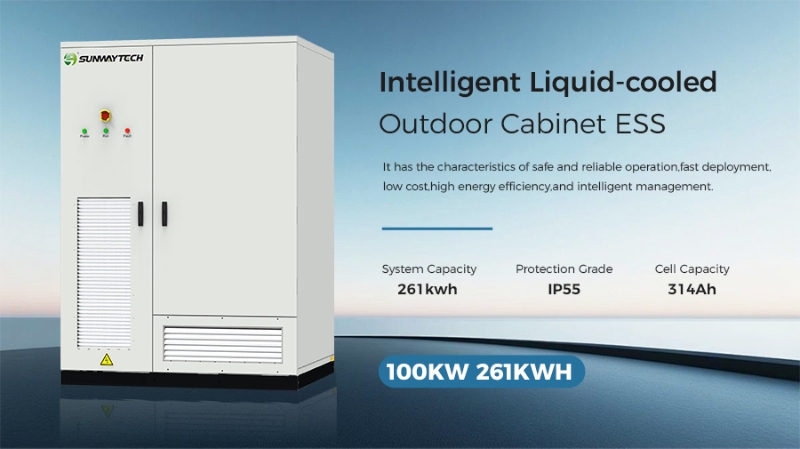
Ein komplettes Batteriespeichersystem (BESS) vereint Batteriespeicherung, bidirektionale Energiewandlung, Energiemanagement, Temperaturregelung, Sicherheitsfunktionen und Kommunikation in einer koordinierten Architektur. Die genaue Konfiguration variiert je nach Projektgröße, aber diese Funktionen müssen stets als ein System und nicht als separate Geräte funktionieren.
Bei SunwayWir sind in den Bereichen private, gewerbliche und industrielle Energiespeicherung sowie bei Energieversorgern tätig. Daher ist die Systemintegration besonders relevant, wenn Projekte über kleinere Batteriespeicheranlagen hinausgehen und ein koordiniertes Energiemanagement, eine Temperaturregelung, Überwachung und Schutzmaßnahmen erfordern.
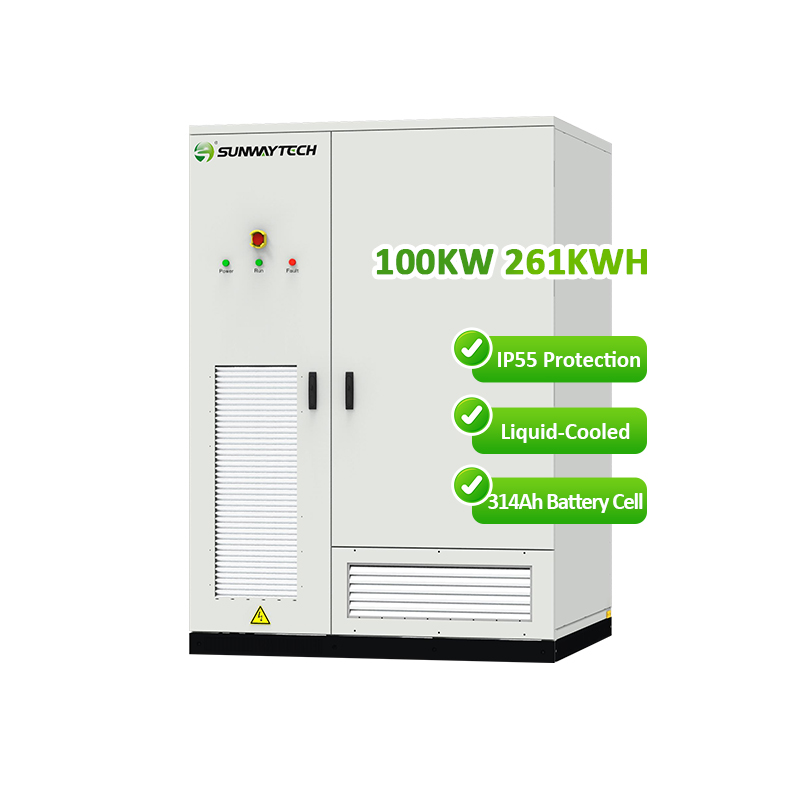
Als kommerzielle und industrielle Referenz dient die SUNWAY 100kW / 261kWh flüssigkeitsgekühltes Energiespeichersystem Das System kombiniert eine 261-kWh-LFP-Batterie mit einer 125-kW-Wechselstromversorgung in einem IP55-Außenschrank. Die integrierte Architektur umfasst modulare Systeme wie PCS, EMS, BMS, Stromverteilung, Brandschutz und Klimatisierung. Intelligente Flüssigkeitskühlung unterstützt das Wärmemanagement, während CAN-, Ethernet- und RS485-Schnittstellen für Systemüberwachung und -koordination bereitgestellt werden.
Dieses integrierte Design verdeutlicht, warum ein Batteriespeichersystem nicht allein anhand seiner Speicherkapazität bewertet werden sollte. Leistungsfähigkeit, gespeicherte Energie, Steuerungsstrategie, Kühlung, Schutz, Kommunikation und Netzanforderungen müssen optimal aufeinander abgestimmt sein. Die endgültige Konfiguration sollte zudem auf das Lastprofil des Standorts, die angestrebte Speicherdauer, den Betriebsmodus, die Installationsumgebung, die Netzbedingungen und zukünftige Erweiterungspläne abgestimmt werden.
Was ändert sich in der Zukunft der Batteriespeicherung?
Die zukünftige Entwicklung zielt auf eine bessere Koordinierung, flexible Expansion und engere Interaktion mit den Energiemärkten ab.
EMS und Software werden eine größere Rolle spielen
Eine fortschrittliche Steuerung kann Lastdaten, Tarife, erneuerbare Energieerzeugung, Batteriestatus und Netzsignale kombinieren, sodass die Einsatzplanung auf sich ändernde Bedingungen anstatt auf feste Zeitpläne reagieren kann.
Modulare Systeme unterstützen flexible Erweiterung
Modulare Batteriesysteme und Leistungswandlungsarchitekturen können ein schrittweises Wachstum vereinfachen. Für eine Erweiterung sind jedoch weiterhin kompatible Batterieversionen, Kommunikationskapazität, elektrische Reserve, Schutzeinstellungen und Platz erforderlich.
Speichersysteme werden mit mehr Netzdiensten verbunden.
Virtuelle Kraftwerke, Lastmanagement, Systemdienstleistungen und aggregierte dezentrale Speichersysteme eröffnen neue Einsatzmöglichkeiten für Batteriespeicher. Im größeren Maßstab können Speichersysteme Teil der Netzflexibilitätsplanung werden, anstatt als eigenständige Backup-Anlage zu dienen.
Wandeln Sie BESS-Grundlagen in eine projektspezifische Konfiguration um
Zu wissen, was das System leistet, ist nur der erste Schritt. Ein Projekt benötigt außerdem die richtige Stromversorgung, Energiekapazität, den passenden Betriebsmodus, Reservekapazität, Kommunikationsarchitektur und Installationsplanung.
Teilen Sie uns Ihr Lastprofil, die angestrebte Backup-Dauer, die Netzspannung, die Tarifstruktur, den Ladeeingang, die Installationsumgebung und Ihren Erweiterungsplan mit. Überprüfen Sie die Anforderungen Ihres Batteriespeicherprojekts. bevor die Batteriegröße oder die Systemarchitektur festgelegt wird.
Häufig gestellte Fragen
F: Worin besteht der Unterschied zwischen einer Batterie und einem Batteriespeichersystem?
A: Eine Batterie speichert elektrische Energie. Ein Batteriespeichersystem (BESS) kombiniert die Batterie mit Überwachung, Leistungsumwandlung, Energiemanagement, Schutz, Temperaturregelung und Kommunikation, sodass die gespeicherte Energie gemäß einer Betriebsstrategie geladen und entladen werden kann.
F: Wie lange kann ein Batteriespeichersystem Strom liefern?
A: Die Laufzeit hängt von der nutzbaren Energiekapazität, der Lastleistung, den Ladezustandsgrenzen, der Backup-Reserve, den Umwandlungsverlusten und den Systemeinstellungen ab. Eine höhere kWh-Nennleistung kann eine bestimmte Last länger versorgen, die verfügbare Leistung in kW muss jedoch ebenfalls ausreichend sein.
F: Kann ein BESS Lastspitzenkappung, Speicherung erneuerbarer Energien und Notstromversorgung unterstützen?
A: Ja, sofern die Systemarchitektur diese Funktionen unterstützt. Da sie dieselbe Batterieleistung und gespeicherte Energie nutzen, muss das Energiemanagementsystem Prioritäten, Reservegrenzen sowie Lade- und Entladepläne festlegen.