

Home Battery Storage in 2026: How to Choose the Right System for Solar Backup
Time : May 11, 2026 View : 262
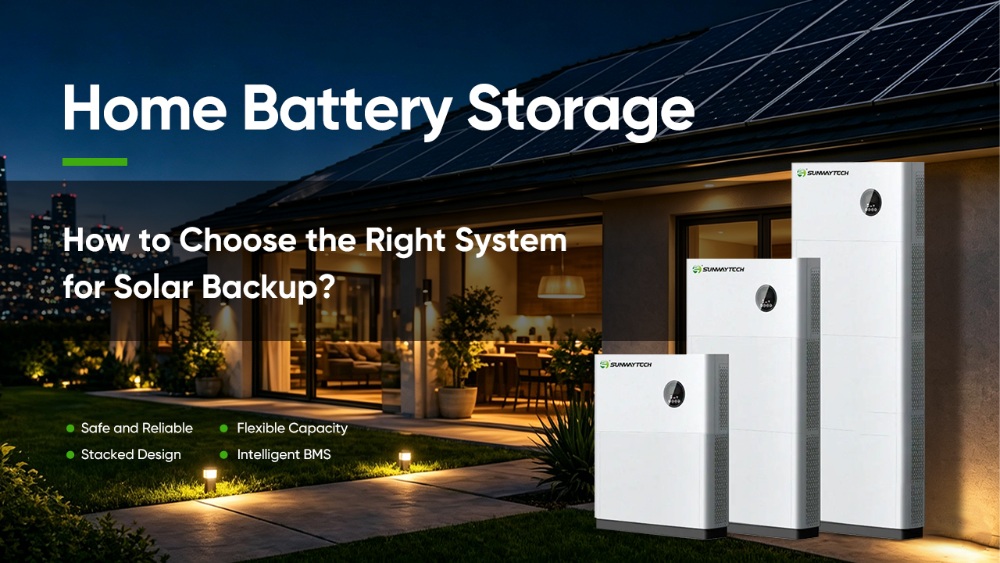
Home battery storage has stopped being merely a specialized extra for home solar setups. By 2026, a growing number of homeowners seek systems. These systems hold solar energy gathered during the day. They enable usage in the evening hours. And they sustain vital loads amid power failures.
A suitable solar backup system ought not rely solely on capacity for selection. An effective home configuration needs to weigh storage capacity, PV input, output power, battery chemistry, installation space, monitoring, and potential growth. For installers and distributors, this involves suggesting a system that matches actual home needs, rather than just the biggest battery on offer.
Why Home Battery Storage Matters in 2026
Residential energy demand is becoming more complex. Homes now depend on stable electricity for remote work, refrigeration, WiFi, security systems, smart appliances, and basic comfort. Rooftop solar adoption also continues to grow, while electricity prices and grid conditions vary by market.
Backup Power for Essential Loads
A home battery backup system does not always need to power the whole house. In many cases, the practical goal is to protect essential loads such as lighting, a refrigerator, a router, computers, small kitchen appliances, medical equipment, and selected heating or cooling devices.
This is where home battery storage differs from a traditional generator. It can work with solar panels, run quietly, and support daily energy management as well as emergency backup. A solar power battery backup system is useful not only when the grid fails, but also when a household wants more control over stored solar energy.
Better Use of Daytime Solar Power
Many homes produce most solar electricity during the day, while energy use often rises in the evening. Without a battery, extra solar power may be exported instead of used inside the home.
Solar battery storage helps shift solar power from daytime generation to nighttime consumption. This improves solar self-consumption and can reduce grid dependence during evening demand periods. For residential projects, solar energy solutions should consider solar generation and battery storage together, because a solar battery system often creates more practical value than PV panels alone.
What a Solar Battery Storage System Does
A solar battery system connects solar panels, battery modules, an inverter, household loads, and sometimes the grid. Its purpose is simple: store available solar energy and release it when the home needs power.
Stores Energy for Later Use
During the day, solar panels generate electricity. Part of this power can run household loads directly, while surplus power can charge the battery. When solar production drops in the evening, the battery can discharge stored energy to support the home.
This is the core function of solar battery storage. It helps a household use more of its own solar power instead of relying only on grid electricity after sunset.
Supports Backup During Outages
Backup performance depends on both kWh and kW. Capacity shows how much energy the battery can store. Output power shows what the system can run at one time.
Rated output power supports continuous loads. Peak output power helps with short starting surges from appliances such as refrigerators or pumps. Transfer time also matters, especially for routers, computers, and other sensitive devices. A reliable solar backup system should match essential loads and switch fast enough to reduce interruption.
How to Choose the Right Capacity
Battery capacity should reflect real use. A large battery may not be efficient if the solar array cannot recharge it well. A small battery may not meet expectations during longer outages.
Start with Essential Loads
Before choosing solar batteries for home use, list the devices that must keep running during an outage. Then estimate how long they need support. A basic setup may cover lights, refrigeration, WiFi, and small electronics. A larger setup may support more appliances, longer backup time, or heavier evening use.
A 5kWh home battery can fit basic backup and limited daily self-consumption. A 10kWh solar battery is often more balanced for broader evening use. A 15kWh home battery storage setup can provide more buffer for larger homes, higher loads, or longer outage needs.
Match Capacity with PV Input
Battery size should match the PV charging side. If the battery is large but PV input is limited, recharge time may be too long after deep discharge or during cloudy weather.
This is why maximum PV input and MPPT voltage range matter. A well-designed solar battery system should accept enough solar input to support the selected battery size and offer a suitable MPPT range for the planned PV string design.
Plan for Expansion
Household demand can increase over time. More appliances, electric heating, larger solar arrays, or new working habits may change the load profile. A fixed-capacity battery may limit future upgrades.
A stackable solar battery helps solve this issue. It allows users to begin with a smaller capacity and expand when demand grows. This is useful for customers who want a lower initial investment but still need a path to larger backup capacity.
Key Features to Check Before Buying Solar Batteries for Home
Capacity is only one part of a home energy storage system. The following features can have a strong effect on long-term performance and user satisfaction.
Battery Chemistry and Cycle Life
Battery chemistry affects safety, stability, service life, and maintenance expectations. LFP batteries are widely used in residential storage because they offer strong thermal stability and long cycle life compared with many older battery options.
Cycle life matters because solar batteries may charge and discharge daily. For this reason, an LFP home battery with a solid cycle rating is often suitable for long-term residential solar backup.
Output Power and Peak Load
A 10kWh battery does not automatically mean the system can run every large appliance. The inverter output must match the loads.
Rated output power supports normal operation. Peak output power supports short surge demand. For residential backup, this distinction is important because refrigerators, pumps, and some tools may require higher starting power than running power.
Monitoring, Communication, and Installation
Monitoring helps users and installers check battery status, PV charging, discharge behavior, and alerts. Communication options such as CAN and RS485 can also support system management and after-sales diagnosis.
Residential batteries also need suitable installation conditions. Indoor floor-mounted systems are often placed in garages, utility rooms, or other dry indoor spaces. Ventilation, temperature range, humidity, service clearance, and floor space should all be checked before installation.
Where SUNWAY 5–15kWh Stackable Home ESS Fits
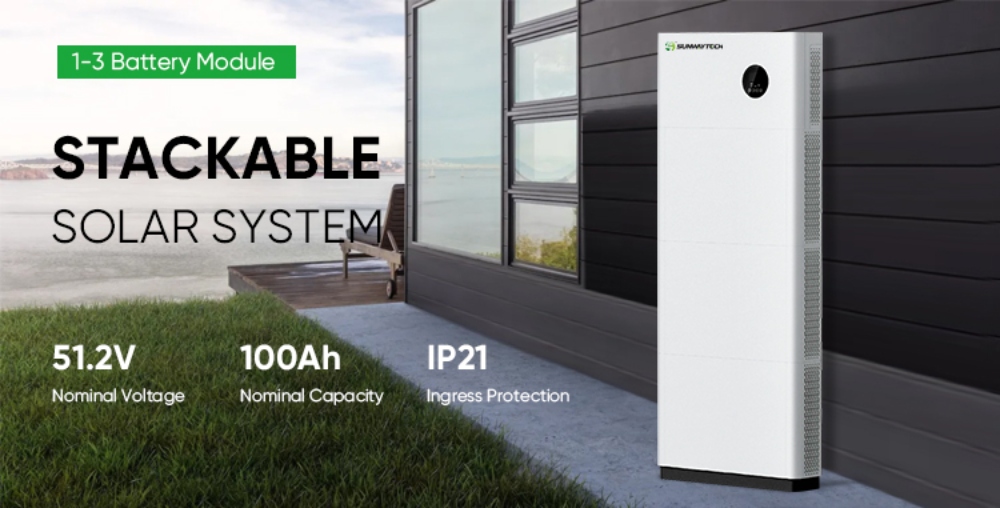
For residential projects that need modular capacity, SUNWAY 5-15kWh Stackable Home ESS fits the 5kWh to 15kWh range with a stackable LFP battery design. Its system energy options are 5.12kWh, 10.24kWh, and 15.36kWh, using one, two, or three battery modules.
The system supports 6000W maximum PV input and a 120–500V MPPT operating range. It provides 5000W rated AC output, 10000VA peak output, and less than 10ms emergency transfer time. These specifications make it suitable for essential load backup, solar self-consumption, and residential energy management.
The product also supports WiFi monitoring, LCD display, CAN and RS485 communication, and grid feed-in. It is designed as an indoor floor-mounted system with natural cooling. These details help homes that need a compact, expandable, and monitored home energy storage system rather than a single fixed-capacity battery.
At SUNWAY, we focus on solar panels, inverters, batteries, and one-stop energy storage photovoltaic solutions. For residential backup, the product value comes from the full system design: solar input, battery storage, backup output, monitoring, and expansion.
Common Mistakes When Choosing a Solar Backup System
Many solar backup projects fall short because buyers compare only visible numbers. Several mistakes are especially common.
Choosing by kWh Only
Battery capacity is important, but it does not define the whole system. Output power, PV input, transfer time, chemistry, communication, and installation conditions all affect real performance.
A buyer may choose a battery that stores enough energy but cannot support the required loads. Another may choose a large battery but pair it with too little solar input, reducing daily value.
Ignoring Critical Load Design
Not every home needs whole-house backup. A better approach is often to separate essential loads from non-essential loads. This can make backup operation more stable and reduce unnecessary battery drain.
Critical load design allows a solar backup system to protect the most important devices first. It can also help a smaller battery deliver better practical value.
Forgetting Future Demand
Home electricity use may grow. If the system cannot expand, users may need a larger replacement later. Modular design gives installers more flexibility and gives homeowners a clearer upgrade path.
Final Checklist Before Selection
Before choosing a home battery storage system, check backup loads, required backup time, planned PV capacity, PV input, MPPT range, rated and peak output, battery chemistry, cycle life, monitoring, installation site, and future expansion options.
These checks help homeowners and B2B buyers compare systems by real performance, not only price or capacity.
Conclusion
The right home battery storage system should match real household power use. Capacity matters, but it should be judged with PV input, output power, battery chemistry, monitoring, installation conditions, and expansion options.
For solar backup in 2026, The most suitable residential systems are not always the largest.They are the systems that balance daily solar self-consumption, backup reliability, safe battery design, and practical installation. A modular 5–15kWh home energy storage system can serve many residential needs because it gives users a clear path from basic backup to larger energy independence.
For project selection, market distribution, or residential backup configuration, you can speak with the SUNWAY team to match storage capacity, solar input, and backup design for your application.
FAQ
Q:How much home battery storage does a typical solar backup system need?
A:The right capacity depends on essential loads and backup time. A smaller home may use around 5kWh for basic backup, while larger homes or longer outages may require 10kWh to 15kWh.
Q:Is LFP battery chemistry suitable for solar batteries for home use?
A:LFP batteries are widely used in residential solar storage because they offer stable performance, strong safety characteristics, and long cycle life for daily charging and discharging.
Q:Why should a solar battery system include monitoring?
A:Monitoring helps users check battery status, solar charging, discharge behavior, and system alerts. It also helps installers provide maintenance and after-sales support.