

Como o armazenamento de energia C&I ajuda fábricas e grandes edifícios a gerenciar a demanda de pico
Data: 15 de junho de 2026 View : 348
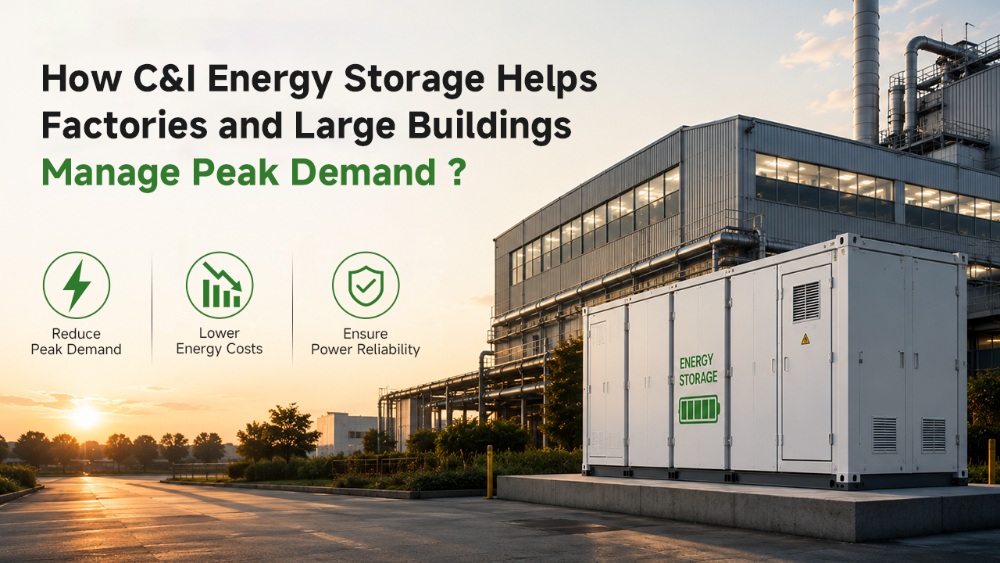
Fábricas e grandes edifícios frequentemente consomem eletricidade em picos repentinos, em vez de padrões consistentes. Linhas de produção são iniciadas. Ciclos de refrigeração são executados. Bombas funcionam. Elevadores se movem. Sistemas de climatização respondem à ocupação do espaço ou à temperatura externa. Esses breves períodos de alta demanda podem não durar muito. No entanto, podem aumentar os custos de eletricidade e sobrecarregar os equipamentos de distribuição.
O armazenamento de energia C&I ajuda a gerenciar esse problema, carregando quando a demanda é menor ou quando há geração solar disponível. Em seguida, descarrega quando o local atinge o pico de demanda. Para os proprietários de projetos, o objetivo não é simplesmente comprar uma bateria maior. Em vez disso, o objetivo é adequar o sistema de armazenamento de energia aos dados de carga, às regras tarifárias, às prioridades de backup e aos planos futuros.
Por que a demanda máxima é importante para sites comerciais e industriais
A demanda de pico é o nível de energia mais alto que um local atinge durante um período de faturamento ou operação. Para fábricas e grandes edifícios, esse pico pode ser proveniente de apenas algumas máquinas ou sistemas funcionando simultaneamente.
O que cria a demanda máxima?
Em fábricas, a demanda máxima geralmente provém de motores, compressores, bombas, esteiras transportadoras, linhas de produção ou sistemas de ar comprimido. Em grandes edifícios, pode vir de equipamentos de climatização (HVAC), elevadores, iluminação, cozinhas, salas de servidores, refrigeração ou carregamento de veículos elétricos.
A questão não se resume apenas ao consumo total de eletricidade. Um local com consumo diário moderado ainda pode gerar uma alta demanda de pico se várias cargas forem acionadas simultaneamente. É por isso que um sistema de armazenamento de energia em baterias deve ser dimensionado com base na curva de carga, e não apenas na conta de luz mensal.
Por que picos de demanda de curta duração afetam os custos operacionais
Em alguns mercados, a cobrança por demanda ou a tarifação baseada na capacidade podem encarecer picos de consumo de energia de curta duração. Mesmo quando as regras tarifárias são diferentes, picos de carga repetidos podem aumentar a pressão sobre os transformadores. Essa situação também pode limitar a aquisição de novos equipamentos.
Os sistemas comerciais de armazenamento de energia em baterias podem descarregar durante períodos de alta demanda. Dessa forma, reduzem a energia consumida da rede elétrica. Essa estratégia de redução de picos de consumo é especialmente útil quando o local apresenta padrões de carga previsíveis ou um cronograma de produção bem definido.
Como o armazenamento de energia reduz a pressão de pico de carga
Um sistema de armazenamento C&I funciona melhor quando o carregamento e a descarga são controlados por uma estratégia operacional clara. Ele deve levar em consideração os períodos de tarifação, as previsões de carga, a produção de energia solar e as necessidades de reserva de energia.
Carregamento durante períodos de baixa demanda ou alta incidência solar
Quando a demanda do edifício é baixa, o sistema pode ser carregado pela rede elétrica, por painéis solares fotovoltaicos ou por ambos. Se o local possuir painéis solares instalados no telhado ou no solo, o armazenamento pode absorver o excedente de energia gerada que, de outra forma, seria exportado ou desperdiçado.
Isso é útil para projetos comerciais de armazenamento de energia solar em baterias, onde a geração solar atinge o pico durante o dia, mas a demanda do edifício aumenta mais tarde. A bateria pode armazenar energia fotovoltaica para suporte à demanda de pico posterior.
Descarregar durante os horários de pico de funcionamento
Quando equipamentos pesados ou sistemas prediais geram picos de demanda, o sistema de armazenamento libera energia para reduzir o consumo da rede elétrica. Uma fábrica pode usar esse recurso durante o aumento da produção. Um hotel pode usá-lo durante o período de resfriamento noturno e atendimento aos hóspedes. Um armazém frigorífico pode usá-lo quando a carga de refrigeração aumenta.
Se a potência de saída do PCS for muito baixa, o sistema pode não reduzir o pico o suficiente. Se a capacidade da bateria for muito pequena, ela pode não descarregar por tempo suficiente. Tanto kW quanto kWh são importantes.
Utilizando o EMS para controle de carga e descarga
O PCS (Controlador de Potência de Partículas) gerencia a conversão bidirecional de energia. O BMS (Sistema de Gerenciamento de Bateria) protege o funcionamento da bateria. O EMS (Sistema de Gerenciamento de Energia) decide quando carregar, quando descarregar, quanta reserva manter e qual estratégia deve ser aplicada durante os períodos de pico.
O controle do sistema de gerenciamento de energia (EMS) é importante porque o gerenciamento de picos de demanda, o autoconsumo de energia solar e a energia de reserva podem compartilhar a mesma bateria. Sem uma estratégia clara, uma função pode prejudicar a outra.
Onde o armazenamento para demanda de pico funciona melhor
A gestão da demanda de pico se aplica a muitos locais comerciais e industriais, mas cada local tem um motivo diferente para usar o armazenamento.
Fábricas e Oficinas de Produção
As instalações de produção frequentemente apresentam curvas de carga irregulares. Os equipamentos podem iniciar em lotes e as linhas de produção podem gerar períodos curtos de alta potência. O armazenamento de energia em baterias industriais pode ajudar a suavizar esses picos, mas o projeto deve levar em consideração a corrente de partida, os horários de turno, as prioridades de produção e as cargas críticas.
Hotéis, escritórios e edifícios comerciais
Grandes edifícios comerciais frequentemente apresentam picos de demanda em sistemas de climatização, elevadores, iluminação, cozinhas e padrões de ocupação. O armazenamento de energia comercial pode suportar janelas de alta capacidade e melhorar o autoconsumo de energia solar quando painéis fotovoltaicos são instalados.
Armazenamento refrigerado, fazendas e armazéns
Instalações de armazenamento refrigerado, fazendas e armazéns podem precisar de energia estável para refrigeração, bombas, ventilação, controle de acesso e monitoramento. O armazenamento de energia pode auxiliar na redução dos picos de demanda, além de ajudar a proteger cargas críticas durante interrupções curtas.
Prioridades de projeto de armazenamento de energia C&I por objetivo de negócios
Para projetos comerciais e industriais, o sistema ideal depende, em primeiro lugar, do objetivo do negócio. Um sistema projetado para controle de demanda de pico não será dimensionado da mesma forma que um sistema projetado principalmente para energia de reserva ou autoconsumo de energia solar.
| Objetivo de negócio | Local típico | Desafio de Potência Principal | Foco no projeto de sistemas de armazenamento de energia |
| Reduzir a demanda de pico | Hotéis, escritórios, fábricas | Períodos curtos de alta demanda aumentam a pressão sobre a demanda. | Saída PCS, tempo de descarga, estratégia EMS |
| Melhorar o autoconsumo de energia solar | Telhados fotovoltaicos, armazéns, parques | A geração de energia solar e o tempo de consumo não coincidem. | Capacidade fotovoltaica, tamanho da bateria, janela de carregamento |
| Suporte a backups críticos | Armazenamento refrigerado, fazendas, salas de dados | A interrupção afeta a segurança ou os bens armazenados. | Lista de carga crítica, reserva, tempo de execução |
| Estabilizar locais com malhas elétricas frágeis | Fábricas remotas, fazendas, áreas de apoio à mineração | A energia da rede elétrica é instável ou a expansão é dispendiosa. | Relação entre energia fotovoltaica e armazenamento, proteção, reserva |
| Prepare-se para o crescimento. | Parques industriais, centros logísticos | Novos equipamentos podem aumentar a demanda | Design modular, expansão paralela |
Como dimensionar um sistema de armazenamento de energia para demanda de pico
O dimensionamento deve começar com a medição ou estimativa do comportamento da carga. Um projeto confiável precisa de mais do que apenas um valor de capacidade alvo.
A potência de pico é medida em kW. Ela indica quanta energia o sistema pode fornecer em um determinado momento. A capacidade de energia é medida em kWh. Ela indica por quanto tempo essa energia pode ser mantida. Para otimizar o consumo de pico, os compradores devem identificar quando ocorre a maior demanda, quanto tempo ela dura e quanta redução é necessária. Um pico curto pode exigir uma saída potente do PCS (Sistema de Controle de Potência), mas uma capacidade moderada da bateria. Um período de pico mais longo pode exigir mais energia armazenada.
Se o mesmo sistema também suportar alimentação de reserva, alguma capacidade da bateria deve ser reservada. Usar toda a energia armazenada para reduzir os picos de consumo pode deixar o local vulnerável durante uma queda de energia. As configurações do sistema de gerenciamento de energia (EMS) devem separar a capacidade de redução de picos da reserva de energia de reserva.
O que verificar em um produto C&I ESS
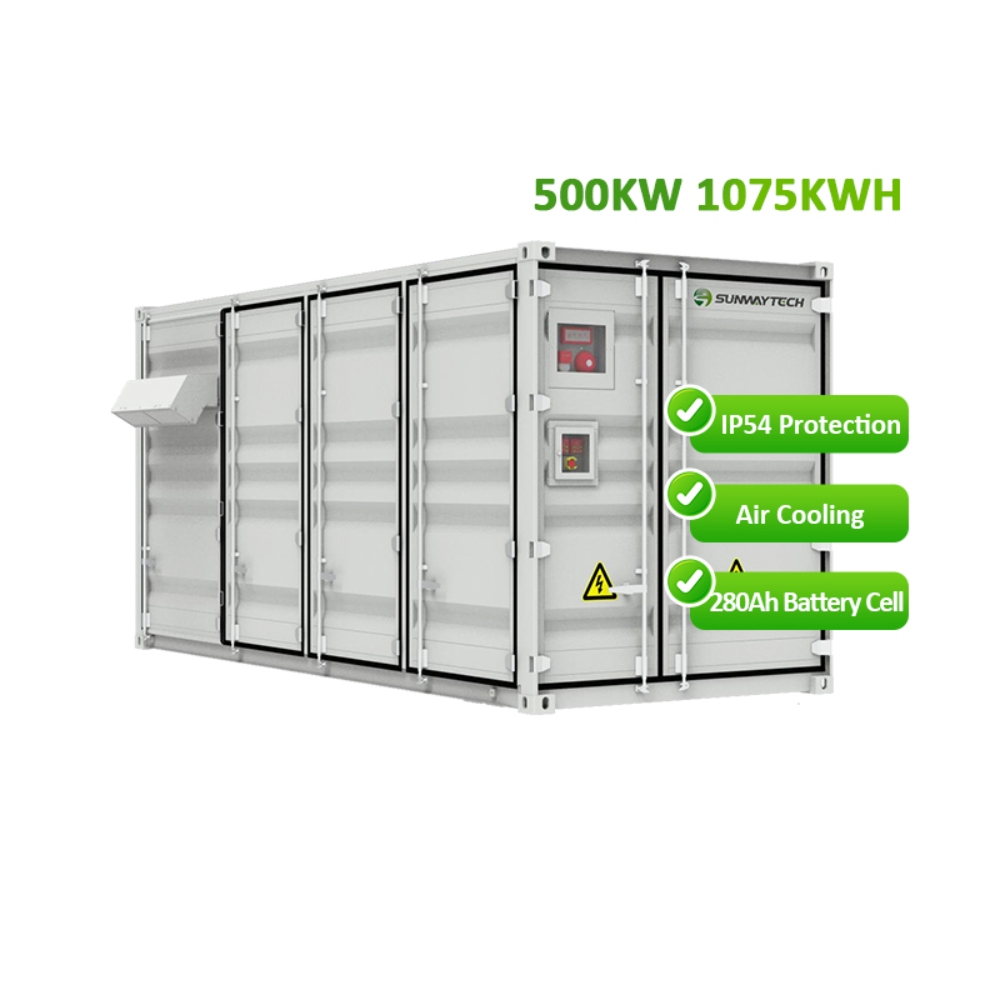
O Sistema de armazenamento de energia Sunway 500kW 1075kWh É um sistema integrado para uso externo, projetado com capacidade de armazenamento de energia de 1075 kWh e potência CA de 500 kW. Utiliza baterias de fosfato de ferro-lítio, arquitetura PCS modular, EMS, BMS, distribuição de energia, controle ambiental e proteção contra incêndio integrada. Inclui ainda 10 caminhos MPPT, corrente máxima fotovoltaica de 160 A, isolamento do transformador, resfriamento inteligente a ar e um invólucro com classificação IP54.
Os locais comerciais e industriais frequentemente necessitam de armários externos que suportem variações de temperatura, umidade, exposição à poeira e permitam fácil acesso para manutenção. O sistema também deve permitir a manutenção sem causar grandes atrasos operacionais.
Sunway Trabalhamos com painéis solares, inversores solares, baterias de armazenamento de energia, sistemas conectados à rede, sistemas isolados da rede, sistemas híbridos, sistemas de montagem e soluções de armazenamento de energia fotovoltaica. Para compradores que estão comparando sistemas de armazenamento de energia de utilidade, Essa gama de produtos mais ampla ajuda a conectar a geração fotovoltaica, o armazenamento em baterias, a conversão de energia e a configuração do projeto.
Erros comuns em projetos de pico de demanda
O primeiro erro é escolher a capacidade sem dados de carga. Uma bateria grande ainda pode não conseguir reduzir a demanda de pico se o momento da descarga ou a saída do PCS estiverem incorretos.
O segundo erro é ignorar a estratégia operacional. Uma fábrica, um hotel e um armazém frigorífico não devem usar as mesmas configurações de EMS (Sistema de Gestão de Energia).
O terceiro erro é esquecer o crescimento futuro da demanda. Novos equipamentos, carregadores para veículos elétricos ou horários de funcionamento mais longos podem alterar o perfil de demanda de pico dentro de um ou dois anos.
Os compradores de dados devem se preparar antes de apresentar uma proposta.
Antes de solicitar uma proposta de sistema de armazenamento de energia (ESS) para clientes comerciais e industriais, prepare as informações sobre o tipo de local, consumo diário de eletricidade, dados de carga por hora ou a cada 15 minutos, valor da demanda de pico, estrutura tarifária, lista de cargas críticas, meta de reserva, plano de energia solar fotovoltaica, tensão da rede, tipo de fase, espaço de instalação, requisitos de refrigeração, requisitos de proteção contra incêndio, necessidades de monitoramento e plano de expansão.
A gestão da demanda de pico funciona melhor quando o sistema é construído com base em dados reais do local. Compartilhe os dados do seu projeto Com a nossa equipe, podemos ajudar a avaliar se um sistema de armazenamento de energia (ESS) de classe C&I de 500 kW ou outra configuração comercial de armazenamento de baterias é mais adequada para sua fábrica, armazém, hotel, instalação de armazenamento refrigerado ou grande edifício.
Perguntas frequentes
P: Como o armazenamento de energia C&I reduz a demanda de pico?
A: Ele carrega durante períodos de baixa demanda ou alta incidência solar e descarrega quando o local atinge o pico de carga. Isso ajuda a reduzir a quantidade de energia consumida da rede durante curtos períodos de alta demanda.
P: O armazenamento de energia em baterias comerciais é útil apenas como fonte de energia de reserva?
R: Não. O armazenamento comercial de baterias pode suportar redução de picos de demanda, autoconsumo de energia solar, gerenciamento de carga sob demanda e fornecimento de energia de reserva crítica. O uso ideal depende do perfil de carga do local, da estrutura tarifária e do cronograma de operação.
P: Quais dados são necessários antes de dimensionar um sistema de armazenamento de energia em baterias?
A: Os compradores devem preparar dados sobre pico de carga, consumo diário de eletricidade, horas de operação, cargas críticas, metas de backup, capacidade fotovoltaica, tensão da rede e condições de instalação antes de selecionar a capacidade do sistema.