

Sistema di accumulo energetico commerciale per fabbriche isolate dalla rete: una guida al progetto solare-accumulo da 500 kW
Data: 8 giugno 2026 View : 361
Un sistema di accumulo energetico commerciale per una fabbrica isolata dalla rete elettrica deve fare molto di più che immagazzinare energia. Deve supportare la produzione giornaliera. Inoltre, deve proteggere le apparecchiature chiave, integrare la produzione di energia solare e mantenere l'impianto in funzione quando la rete elettrica non è disponibile o è inaffidabile. Per le fabbriche situate in aree remote, zone di trasformazione agricola, siti minerari e grandi edifici industriali, la progettazione del sistema dovrebbe partire dal profilo di carico, non dalla dimensione della batteria.
Il progetto solare con accumulo da 500 kW / 2 MWh di Sunway per uno stabilimento di lavorazione del caffè a Bagua, in Perù, lo dimostra chiaramente. L'impianto opera completamente fuori dalla rete elettrica. L'energia solare carica il sistema di batterie durante il giorno, mentre l'energia accumulata alimenta lo stabilimento quando la produzione solare diminuisce. Per gli acquirenti che intendono realizzare un sistema di accumulo energetico simile per il proprio stabilimento, questo progetto offre un utile riferimento per il dimensionamento, la scelta dei componenti e la pianificazione del sistema. Dimostra inoltre come Sunway affronti i progetti industriali off-grid considerandoli come sistemi energetici completi, piuttosto che come pannelli solari, batterie e inverter separati.
Perché le fabbriche isolate dalla rete elettrica necessitano di un sistema solare con accumulo
Una fabbrica senza un accesso stabile alla rete elettrica non può fare affidamento esclusivamente sui pannelli solari. La produzione di energia solare varia in base alla luce solare, alla nuvolosità, alle ore di produzione e alle condizioni stagionali. Un sistema solare con accumulo contribuisce a trasformare questa produzione variabile in energia utilizzabile per il funzionamento quotidiano.
Per un impianto di lavorazione del caffè isolato dalla rete elettrica, il sistema deve supportare apparecchiature come motori, pompe, nastri trasportatori, illuminazione, sistemi di controllo, carichi per uffici e dispositivi di sicurezza. Questi carichi potrebbero non funzionare contemporaneamente, ma necessitano comunque di un'alimentazione stabile. Un sistema di accumulo di energia a batteria ben progettato immagazzina l'energia fotovoltaica in eccesso e la rilascia in base alla domanda effettiva.
Per gli acquirenti, la domanda principale non è "Quanto è grande la batteria?", bensì "Quali carichi devono rimanere online e per quanto tempo?".
Inizia con il profilo di carico di fabbrica
Ogni sito industriale ha un proprio profilo di consumo energetico. Un impianto di lavorazione del caffè, un magazzino frigorifero, un'officina tessile e un magazzino possono tutti necessitare di un sistema di accumulo a batteria, ma le loro curve di carico possono essere molto diverse.
Identificare i carichi critici e non critici
Il primo passo consiste nel separare i carichi critici da quelli generali. I carichi critici possono includere sistemi di controllo della produzione, macchinari di processo selezionati, sistemi di refrigerazione, pompe, sistemi di sicurezza, apparecchiature di comunicazione e illuminazione di emergenza. I carichi non critici possono spesso essere spostati o ridotti durante i periodi di bassa potenza.
Questa separazione mantiene il sistema pratico. Se ogni dispositivo viene considerato essenziale, il progetto potrebbe richiedere batterie sovradimensionate e una maggiore capacità dell'inverter. Se invece l'elenco dei carichi critici è chiaro, il sistema può fornire energia stabile con un migliore controllo dei costi.
Corrispondenza tra kW e kWh
I kW indicano quanta potenza il sistema può erogare in un dato momento. I kWh indicano per quanto tempo può supportare tale carico. Una fabbrica con motori o apparecchiature di produzione potrebbe necessitare di una potenza elevata dall'inverter, anche quando la durata di backup richiesta è moderata. Un sito con attività serale potrebbe necessitare di una maggiore capacità della batteria, anche se il picco di carico non è molto elevato.
Una semplice formula per le fasi iniziali è:
Capacità della batteria richiesta = potenza del carico critico × ore di autonomia ÷ percentuale di batteria utilizzabile
Questa formula è solo un punto di partenza. I progetti reali devono considerare anche la riserva della batteria, le ore di ricarica solare, l'efficienza dell'inverter, la temperatura ambiente, la corrente di spunto delle apparecchiature e la crescita futura della produzione.
Come è stato configurato il progetto off-grid
Il progetto in Perù è stato realizzato come un sistema solare-accumulo off-grid completo per uso industriale. Integra la generazione fotovoltaica, l'accumulo tramite batterie al litio, la conversione di potenza, il controllo MPPT, il monitoraggio e la protezione in container. Per Sunway, questo tipo di progetto non si limita alla fornitura di apparecchiature. Il sistema deve essere configurato in base al profilo di carico del cliente, alle condizioni del sito, alla risorsa solare, al programma operativo e alle esigenze di manutenzione a lungo termine.
Lato fotovoltaico
Il progetto prevede una capacità fotovoltaica di 612 kW, progettata per generare oltre 800 MWh all'anno. I pannelli sono disposti in stringhe da 12 moduli. La parte fotovoltaica utilizza 12 scatole di giunzione, ciascuna con 8 ingressi e 1 uscita a 1000 V.
I moduli sono installati a terra su piedistalli in cemento con un angolo di inclinazione di 5 gradi. Questo sistema a terra è generalmente adatto a siti industriali, in quanto offre terreno disponibile e facilita l'accesso per la manutenzione. Inoltre, presenta minori limitazioni per quanto riguarda le strutture sul tetto.
Nei progetti off-grid, la configurazione degli impianti fotovoltaici non è solo un dettaglio di installazione. Influisce direttamente sulla velocità di ricarica delle batterie e sulla quantità di energia che la fabbrica può utilizzare durante la produzione giornaliera.
Lato di immagazzinamento e conversione di potenza
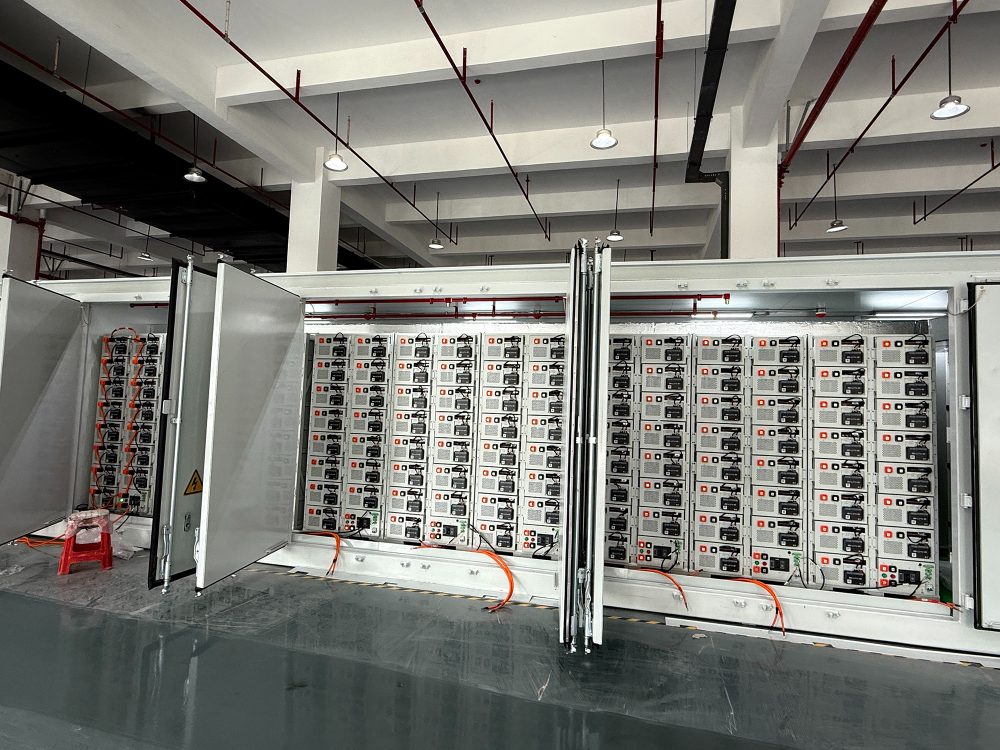
Il sistema di accumulo energetico utilizza 10 gruppi di batterie al litio. Ogni gruppo ha una tensione di 768 V e una capacità di 280 Ah, per una capacità totale di 2150 kWh. Il sistema di batterie è integrato in un container esterno di 12 metri (40 piedi) dotato di protezione antincendio, sistema di monitoraggio e climatizzazione. Un quadro di distribuzione centrale collega tutti i gruppi di batterie.
Il lato di conversione di potenza utilizza un inverter bidirezionale da 500 kW con trasformatore di isolamento. Il sistema comprende anche 12 moduli MPPT DC/DC. Quattro moduli collegano ciascuno 8 stringhe di pannelli solari, mentre otto moduli ne collegano 7 ciascuno.
Questa struttura consente alla generazione di energia solare, alla ricarica delle batterie e all'alimentazione del carico di funzionare come un unico sistema energetico autonomo coordinato.
Ciò riflette anche uno dei principali vantaggi di una soluzione di accumulo integrata Sunway: il lato fotovoltaico, il lato batterie, il lato inverter, il sistema di protezione e il sistema di monitoraggio sono progettati per funzionare insieme. Per gli stabilimenti non collegati alla rete elettrica, questa integrazione può ridurre i componenti non compatibili, semplificare il coordinamento del progetto e agevolare la successiva gestione da parte del team in loco.
Dove si colloca un sistema di accumulo di energia (ESS) da 500 kW e 1075 kWh
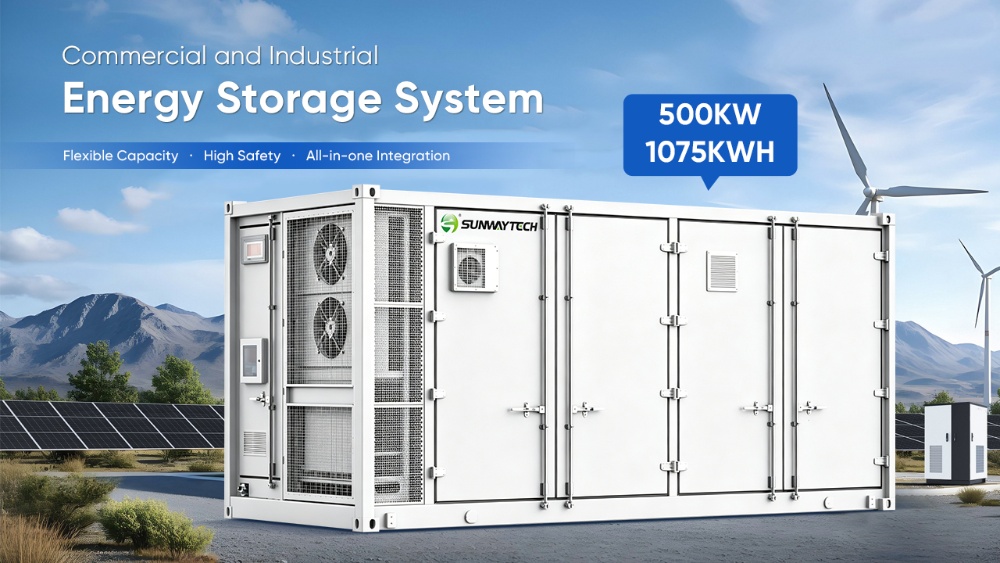
Non tutte le fabbriche necessitano di un sistema completo da 2 MWh nella prima fase. Alcuni progetti possono iniziare con un blocco batterie più piccolo ed espandersi in seguito con la crescita della produzione. Per questo tipo di domanda C&I di media scala, il Sistema di accumulo Sunway da 500 kW e 1075 kWh è un'opzione di sistema rilevante.
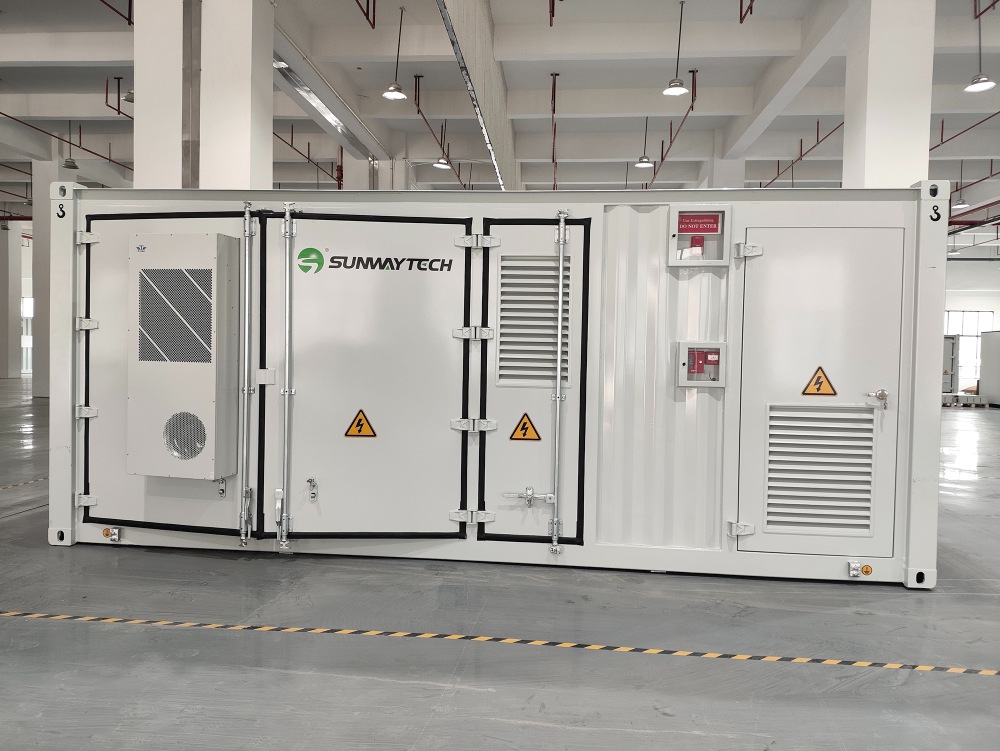
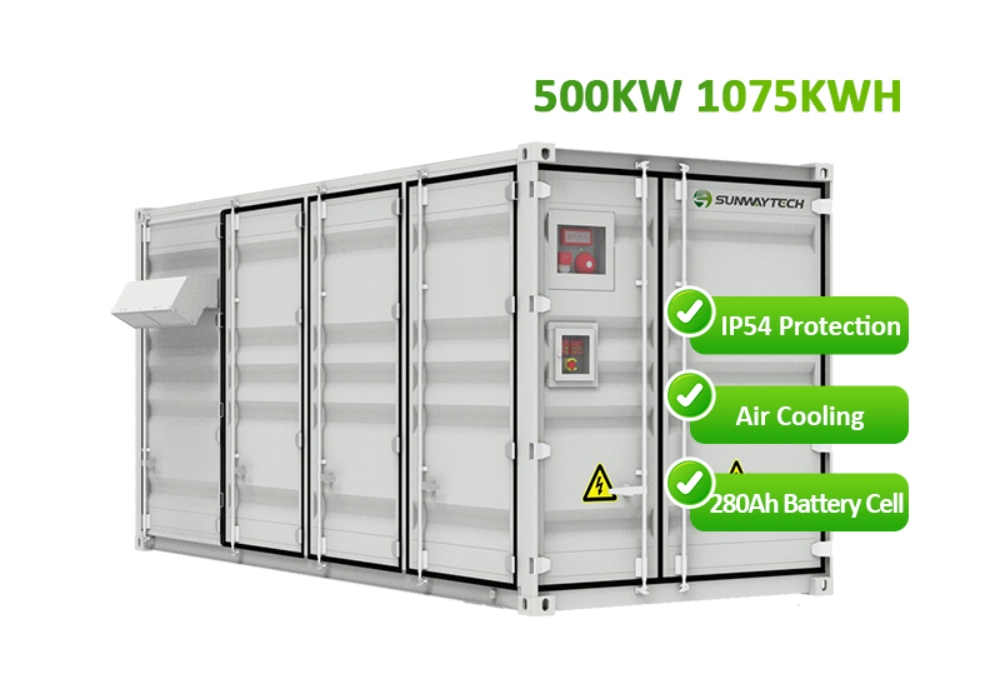
Offre una capacità di accumulo di energia nominale di 1075 kWh e una potenza CA nominale di 500 kW. Il sistema utilizza batterie al litio ferro fosfato, un'architettura PCS modulare, EMS, BMS, distribuzione di potenza, gestione termica, protezione antincendio e un armadio esterno integrato. Ha una tensione nominale di sistema di 768 V, un intervallo di tensione da 672 V a 864 V, 10 percorsi MPPT, una corrente massima fotovoltaica di 160 A e un involucro con grado di protezione IP54.
Il suo valore non risiede solo nella capacità nominale. Il design integrato dell'armadio riunisce in un unico sistema l'accumulo di energia tramite batteria, il sistema di controllo della potenza (PCS), la gestione energetica, il controllo della temperatura e la protezione di sicurezza. La tecnologia delle batterie al litio ferro fosfato garantisce cicli di carica e scarica stabili per l'uso commerciale e industriale. I sistemi di controllo EMS e BMS aiutano a gestire il comportamento di carica e scarica, lo stato della batteria, gli allarmi e la protezione del sistema. La protezione antincendio e la gestione termica sono inoltre importanti per i siti industriali esterni, dove il sistema può funzionare per lunghe ore in condizioni ambientali variabili.
Questo tipo di sistema è adatto a fabbriche di medie dimensioni, impianti di trasformazione agricola, grandi magazzini, zone industriali e siti commerciali che necessitano di autoconsumo solare, supporto energetico off-grid o gestione dei picchi di carico. Per strutture più grandi, dopo un'analisi del carico, si possono valutare unità multiple o sistemi containerizzati di maggiori dimensioni.
Fattori di design che gli acquirenti dovrebbero valutare
Un sistema di accumulo di energia da 500 kW non è un prodotto standard pronto all'uso. Deve essere compatibile con il progetto elettrico dello stabilimento, il programma operativo e l'ambiente di installazione.
Risorsa solare e capacità fotovoltaica
L'impianto fotovoltaico deve essere dimensionato in base al consumo energetico giornaliero e alle esigenze di ricarica della batteria. Se la capacità fotovoltaica è troppo bassa, la batteria potrebbe non ricaricarsi abbastanza velocemente dopo una scarica intensa. Se la capacità fotovoltaica è elevata ma la capacità della batteria è bassa, l'energia solare in eccesso potrebbe andare sprecata.
Per le fabbriche non collegate alla rete elettrica, è opportuno valutare anche le variazioni stagionali dell'irraggiamento solare. Un sistema che funziona bene nei mesi secchi potrebbe necessitare di una riserva aggiuntiva durante i periodi nuvolosi o piovosi.
Riserva della batteria e strategia operativa
I sistemi off-grid dovrebbero mantenere una riserva di carica programmata nella batteria. Scaricare completamente la batteria troppo spesso può ridurre la stabilità del sistema e accorciarne la durata. Una buona strategia definisce quando la batteria si carica, quando si scarica, quali carichi hanno la priorità e quando i carichi non critici devono essere posticipati.
In questo contesto, i sistemi di controllo EMS e BMS rivestono un ruolo fondamentale. Essi contribuiscono a gestire lo stato della batteria, il comportamento di carica e scarica, gli allarmi e la protezione del sistema.
Condizioni del sito e accesso per la manutenzione
I sistemi industriali per esterni necessitano di spazio per container o armadi, instradamento dei cavi, messa a terra, ventilazione, sicurezza antincendio e accesso per la manutenzione. Gli stabilimenti situati in zone remote dovrebbero inoltre considerare la disponibilità di pezzi di ricambio, l'accesso per il monitoraggio, la formazione degli operatori e la capacità di manutenzione locale.
Sunway Questa gamma di prodotti si rivolge a diversi settori, dai pannelli solari agli inverter, dalle batterie per l'accumulo di energia ai sistemi on-grid, off-grid, ibridi, ai sistemi di montaggio e alle soluzioni di accumulo di energia fotovoltaica. Contribuisce a integrare in modo più fluido la parte fotovoltaica, la parte di accumulo, la parte di inverter e la progettazione del progetto.
Per i progetti industriali all'estero, anche la consegna e l'assistenza post-vendita sono fondamentali. Gli acquirenti necessitano di qualcosa di più della semplice spedizione delle apparecchiature. Hanno bisogno di supporto per la configurazione del sistema, documentazione tecnica, assistenza per la messa in servizio, configurazione del monitoraggio e supporto post-vendita. L'esperienza di Sunway con progetti off-grid e ibridi solari con accumulo aiuta gli acquirenti a ridurre l'incertezza che spesso si presenta tra la fase di progettazione, consegna, installazione e gestione a lungo termine.
Errori comuni nei progetti di stoccaggio industriale fuori rete
Il primo errore consiste nello scegliere basandosi esclusivamente sulla capacità della batteria. Un sistema da 1075 kWh e uno da 2 MWh possono essere entrambi adatti in condizioni diverse. La scelta giusta dipende dal fabbisogno energetico, dalle ore di autonomia necessarie, dalla produzione di energia solare e dal programma di produzione.
Il secondo errore consiste nell'ignorare la corrente di spunto delle apparecchiature. Motori, pompe, compressori e macchine di processo possono generare brevi picchi di potenza. La progettazione dell'inverter e del PCS deve tenerne conto.
Il terzo errore consiste nel trattare allo stesso modo i sistemi off-grid e quelli connessi alla rete. Un sito connesso alla rete può utilizzare quest'ultima come tampone. Una fabbrica off-grid necessita di un input solare sufficiente, di una riserva di energia nelle batterie e di un inverter affidabile per funzionare in modo indipendente.
Il quarto errore consiste nel trascurare l'espansione a lungo termine. Gli stabilimenti possono aggiungere nuove linee di produzione, impianti di raffreddamento, illuminazione o macchine per l'imballaggio. Una buona progettazione dovrebbe prevedere la possibilità di pianificare la capacità produttiva futura.
Lista di controllo finale prima di richiedere la progettazione del sistema
Prima di richiedere un progetto, è necessario preparare le seguenti informazioni: ubicazione dello stabilimento, settore industriale principale, consumo elettrico giornaliero, carico di picco, elenco delle apparecchiature, elenco dei carichi critici, ore di funzionamento richieste, area disponibile per l'installazione dell'impianto solare, condizioni di irraggiamento solare locali, stato di accesso alla rete, requisiti di tensione e fase, spazio di installazione e piano di espansione.
Per progetti simili a questo impianto di lavorazione del caffè off-grid in Perù, il sistema dovrebbe essere progettato come un sistema solare integrato con accumulo, e non come una combinazione di pannelli solari e batterie. La capacità fotovoltaica, la capacità delle batterie, la potenza dell'inverter, la progettazione del regolatore di carica MPPT, la protezione, il monitoraggio e l'assistenza post-vendita devono funzionare in sinergia.
Sunway fornisce soluzioni per l'accumulo di energia solare Per progetti energetici commerciali, industriali, off-grid e ibridi. Per fabbriche, siti di trasformazione agricola, magazzini e grandi edifici commerciali, il punto di partenza più utile sono i dati di carico reali. Inviaci i dettagli del tuo progetto, Possiamo aiutarvi a valutare un sistema di accumulo energetico (ESS) da 500 kW o una configurazione solare con accumulo di potenza superiore, adatta al vostro sito.
Una revisione completa può includere anche la capacità della batteria, l'abbinamento fotovoltaico, la protezione del sistema, la pianificazione dell'installazione, il supporto alla messa in servizio e il supporto operativo, in modo che il sistema finale sia più facile da implementare e manutenere dopo la consegna.
FAQ
D: Un sistema di accumulo di energia da 500 kW è sufficiente per una fabbrica non collegata alla rete elettrica?
R: Dipende dal carico di picco della fabbrica, dalle apparecchiature critiche, dalle ore di funzionamento e dall'autonomia richiesta della batteria. Un sistema da 500 kW può supportare molti progetti industriali di medie dimensioni, ma la configurazione finale dovrebbe basarsi sui dati di carico reali e sulle condizioni di generazione solare.
D: Qual è la differenza tra un sistema di accumulo energetico (ESS) da 1075 kWh e un sistema solare con accumulo da 2 MWh?
A: Un sistema di accumulo di energia (ESS) da 1075 kWh offre una capacità di accumulo nominale inferiore e può essere adatto a progetti commerciali e industriali di medie dimensioni o a implementazioni a fasi. Un sistema da 2 MWh può supportare tempi di funzionamento più lunghi o carichi off-grid più elevati. L'opzione corretta dipende dalla domanda di produzione, dalle ore di backup e dalla capacità di ricarica dei pannelli fotovoltaici.
D: Perché le fabbriche isolate dalla rete elettrica necessitano di batterie anziché solo di pannelli solari?
A: I pannelli solari generano energia solo quando c'è luce solare. Le batterie immagazzinano l'energia solare diurna e la rilasciano quando la domanda di produzione supera la produzione fotovoltaica, durante i periodi nuvolosi o dopo il tramonto. Per le fabbriche non collegate alla rete elettrica, l'accumulo trasforma la produzione solare variabile in una fornitura di energia più stabile.